For contractors in South Africa, the productivity of a self loading concrete mixer cannot be judged by mixing capacity alone. A machine may produce a substantial batch, but the value of that concrete is only realized when it can be discharged efficiently and placed where it is needed. Slow unloading can create a bottleneck between concrete production and actual construction progress, particularly when crews, formwork, pumps, and other equipment are already prepared for the pour.
This makes discharge speed an important part of the equipment’s practical productivity. Faster unloading can shorten each operating cycle, reduce idle time, improve labor coordination, and allow more batches to be completed within a working day. For contractors dealing with demanding schedules, dispersed construction sites, or projects where ready-mix delivery is inconvenient, these seemingly small time savings can accumulate into a meaningful improvement in overall project value.
Why Unloading Speed Affects the Real Value of Each Concrete Batch
A Full Drum Does Not Mean Maximum Productivity
The headline capacity of a concrete self loading mixer describes how much concrete the machine can produce in one batch. It does not necessarily indicate how efficiently that batch can be converted into construction output.
Consider a simplified operating cycle: the machine loads aggregates and cement, adds water, mixes the concrete, travels to the pouring location, discharges the batch, and returns for the next cycle. If unloading takes longer than necessary, the machine remains occupied even though mixing has already been completed. The lost minutes are repeated with every batch.
That distinction matters. A contractor completing numerous batches each day may lose a substantial amount of productive time through small delays at the discharge stage. Faster unloading therefore improves not merely the speed of one operation, but the cadence of the entire concrete supply process.
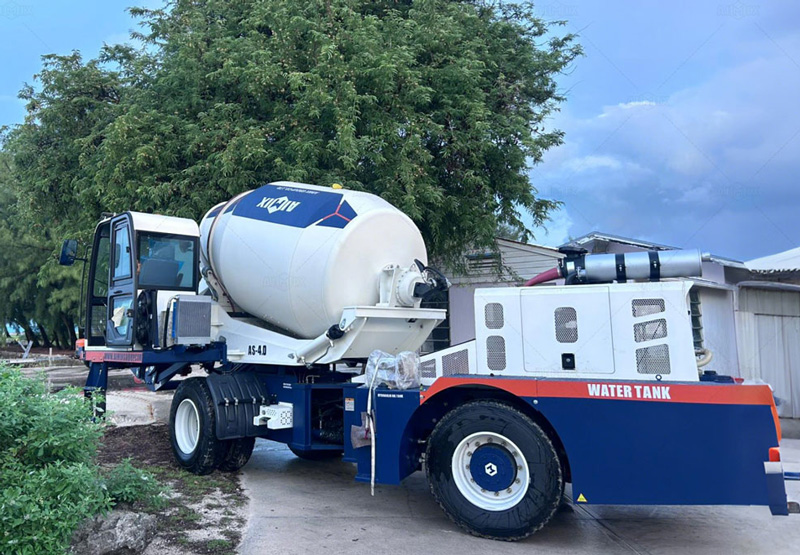
More Effective Batches Without Increasing Mixer Size
Improving unloading efficiency can increase practical output without requiring contractors to immediately move to a larger mixer. This is particularly relevant when the existing machine already provides an appropriate batch capacity for the project.
If a mixer can complete its loading, mixing, transport, and discharge sequence more quickly, it may achieve more cycles during the same working period. The additional output comes from better utilization rather than simply increasing equipment dimensions.
For South African contractors balancing equipment investment against project budgets, this distinction is important. Higher productivity does not always require a larger machine. Sometimes the greater opportunity lies in removing the bottleneck within the existing production cycle.
How Faster Discharge Improves Construction Operations in South Africa
Reducing Waiting Time for Workers and Downstream Equipment
Concrete placement is rarely a one-machine operation. Workers prepare reinforcement and formwork, mobile concrete pump or other placing equipment may be positioned nearby, and finishing crews depend on a predictable concrete supply.
When unloading is slow, these resources can become temporarily idle. Labor continues to incur costs while equipment remains underutilized. The result is an operational inefficiency that may not appear on the mixer specification sheet but becomes visible on the construction site.
Faster discharge helps synchronize these activities. Once the mixer reaches the pouring point, concrete can be released promptly, allowing the placement crew to continue working and enabling the mixer to return for another batch. This creates a more fluid sequence rather than a stop-start operation.
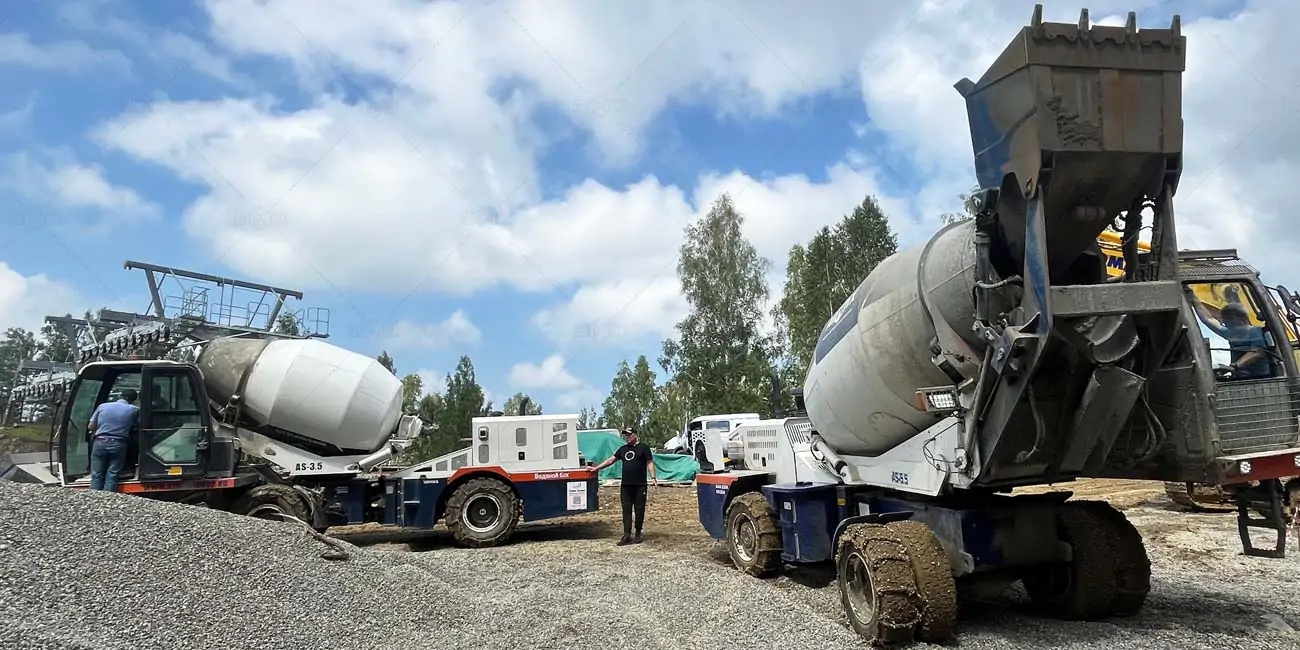
Particularly Valuable on Projects With Multiple Pouring Locations
South African construction projects can involve very different site conditions, from urban developments and commercial buildings to rural infrastructure, housing projects, agricultural facilities, and road-related works. A self loading concrete mixer for sale in South Africa is often selected because it can produce and transport concrete directly to locations where conventional ready-mix delivery may be less convenient.
On these projects, the discharge point may change frequently. A mixer that can unload efficiently and position concrete accurately gives contractors greater control over the final stage of delivery.
This flexibility can reduce unnecessary material handling. Instead of producing concrete at one location and relying on several additional steps to move it toward the application point, the mixer can bring the batch closer to where the concrete is actually required.
Lower Risk of Disrupting the Concrete Pour
Concrete placement benefits from continuity. Excessive interruptions can complicate coordination and make it more difficult for crews to maintain a consistent pouring sequence.
Faster unloading helps shorten the interval between arrival and placement. This does not mean discharge speed alone guarantees concrete quality; mix design, transportation time, material proportions, weather, and site procedures remain important. However, efficient unloading removes one avoidable source of delay from the workflow.
For projects operating under tight schedules, eliminating avoidable delays is often more valuable than pursuing theoretical maximum capacity.
How Contractors Can Evaluate Discharge Performance Before Choosing a Mixer
Look at the Complete Working Cycle
A sensible equipment assessment should examine more than the stated mixing capacity. Contractors should consider how loading, mixing, traveling, positioning, unloading, and cleaning interact within the actual project environment.
Measure Practical Productivity, Not Just Batch Size
A useful evaluation can focus on questions such as:
- How quickly can the mixer discharge a completed batch?
- How easily can the operator position the discharge outlet?
- How much concrete remains inside the drum after unloading?
- How long does the complete operating cycle take?
- Can the machine maintain consistent performance during repeated cycles?
These factors provide a more realistic picture of productivity than capacity figures alone.
Match Discharge Capability With Project Requirements
The fastest possible unloading system is not automatically the best choice for every contractor. The appropriate configuration depends on the type of concrete work, site layout, required output, travel distance, and placement method.
For smaller construction projects, precise and convenient discharge may matter more than maximum throughput. For larger infrastructure projects, rapid unloading combined with a suitable mixer capacity can help maintain a higher production rhythm.
The objective is therefore not simply to find the machine with the biggest drum or the fastest specification. It is to identify a self loading large concrete mixer for sale whose complete operating cycle matches the project’s actual demands.
In practical terms, every concrete batch represents more than a volume of material. It also represents machine time, labor, fuel, site coordination, and scheduled construction activity. Faster unloading helps convert that batch into completed work sooner. For South African contractors, this can mean more productive cycles, fewer idle resources, and better utilization of equipment throughout the project. When comparing self loading mixers, discharge speed deserves the same scrutiny as mixing capacity because the real measure of value is not how much concrete a machine can hold, but how efficiently each batch contributes to construction progress.