A quarry crushing plant can have sufficient crusher capacity and still struggle to maintain continuous aggregate production if its stockpiles are poorly planned. Stockpiles are not simply places to store finished material; they are part of the material-flow system connecting crushing, screening, loading, and customer dispatch. Their size, location, shape, and product separation can determine whether the plant runs steadily or repeatedly stops because of blocked conveyors, limited storage, or inconsistent downstream demand. In a rock crushing plant, good stockpile design therefore helps maintain production even when extraction, processing, and material sales operate at different rates.
Stockpiles Create a Buffer Between Production Stages
Crushing rarely operates at exactly the same rate as material loading or customer demand. The quarry may produce aggregate continuously during a shift while trucks arrive intermittently to collect finished products. A stockpile provides a buffer between these different operating speeds.
For example, a crusher may produce aggregate at a relatively constant rate, while customer trucks arrive in batches. Without adequate storage, the crushing circuit could be forced to slow down or stop whenever the dispatch side cannot remove material quickly enough.
The same principle applies inside the processing circuit. Intermediate stockpiles can sometimes separate different production stages, allowing upstream and downstream operations to continue despite short-term variations. This can be particularly useful in larger quarries where several processing lines operate simultaneously.
Stockpile Location Changes Material Handling Costs
A stockpile is valuable only if material can move to and from it efficiently. If finished aggregate has to travel long distances by conveyor or loader before reaching its storage area, additional handling costs can accumulate throughout the life of the quarry.
The location should therefore be considered together with the crushing plant layout. Primary crushing, secondary crushing, screening, finished-product stockpiles, and loading areas should form a logical material-flow sequence.
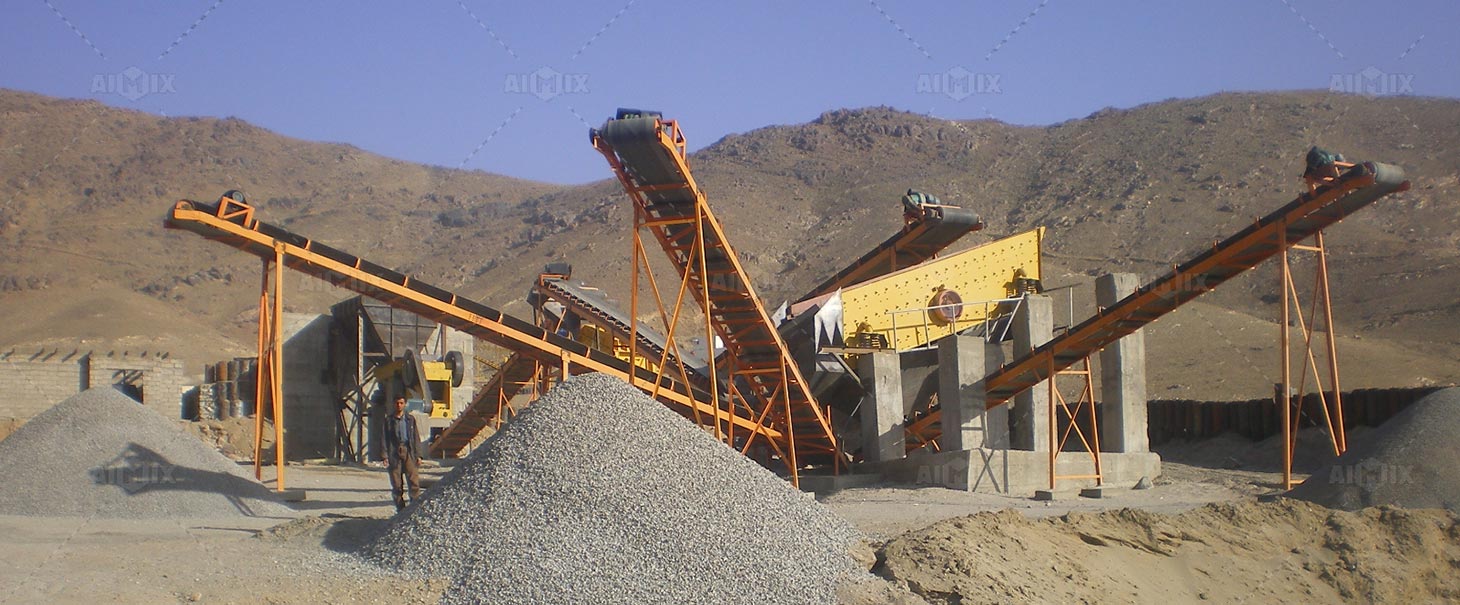
In a gravel crushing plant, for instance, several aggregate sizes may be produced simultaneously. Locating their stockpiles too close together can make separation difficult, while placing them too far from the screening circuit can increase conveyor length or loader travel. A well-planned layout reduces unnecessary movement between processing and final dispatch.
Separate Products Need Clearly Defined Stockpile Areas
Multi-product aggregate production requires more than simply creating large piles of crushed material. Different sizes need to remain separated so that one product does not contaminate another.
A plant might produce several fractions for concrete, asphalt, drainage, or road construction. If the stockpiles overlap or loaders repeatedly cross between products, material contamination can occur. This can affect gradation and make an otherwise well-processed aggregate unsuitable for a specific customer.
Clearly defined stockpile locations help maintain product identity. They also make inventory management easier because operators can see which products are available, which are running low, and which require additional production.
Stockpile Capacity Should Match Production and Demand
There is no universal ideal stockpile size. The appropriate capacity depends on production rate, operating hours, customer demand, truck availability, and the required safety margin.
A stockpile that is too small provides little protection against fluctuations. If customer deliveries are delayed for several hours, the plant may quickly run out of available storage and have to reduce production.
An excessively large stockpile can create another problem. It occupies valuable quarry space, increases material handling requirements, and may require additional equipment or longer conveyor systems. Therefore, storage capacity should be based on the expected material flow rather than simply maximizing storage volume.
Stockpile Shape Affects Product Quality
How material is deposited onto a stockpile can influence segregation. Larger particles may roll toward the outside of a pile while finer particles remain closer to the center. If the material is later reclaimed incorrectly, the resulting feed may not have the same gradation as the original screened product.
This matters particularly for road aggregate production, where consistent gradation can be important for achieving the required performance of base and sub-base materials.
Conveyor discharge arrangements, stockpile height, and the method used to reclaim aggregate should therefore be considered together. In some operations, controlled stacking and reclaiming can reduce segregation and help maintain more consistent product characteristics.
Stockpiles Also Protect Continuous Crushing
One of the less obvious functions of stockpiles is protecting the crushing circuit from downstream interruptions. Suppose trucks temporarily stop collecting finished aggregate because of bad weather, equipment maintenance, or a change in project scheduling. If sufficient stockpile capacity exists, the crushing plant can continue operating rather than immediately stopping.
The opposite situation can also occur. If upstream quarry extraction is temporarily interrupted, stored material may allow downstream screening or loading operations to continue for a limited period.
This buffer can improve equipment utilization. Instead of forcing every part of the quarry operation to start and stop together, stockpiles allow different processes to operate with some degree of independence.
Stockpile Management Should Follow the Quarry’s Production Plan
Stockpile design should not be treated as a final layout decision after the crushing equipment has already been selected. It should be considered during the design of the entire rock crushing plant.
The expected production rate, number of products, material flow, loading equipment, haul routes, and future quarry expansion all influence where stockpiles should be located. The design should also leave sufficient access for loaders and trucks without interfering with conveyors or other plant equipment.
As production expands, stockpile requirements can change. A quarry that initially sells two aggregate sizes may later add manufactured sand or additional coarse fractions. Planning adequate space and flexible material-flow routes from the beginning can make such expansion easier.
Better Stockpile Design Can Improve Quarry Economics
Stockpiles do not directly increase crusher capacity, but they can help the existing capacity become more useful. By separating production from dispatch, maintaining product availability, reducing unnecessary handling, and supporting continuous operation, they can reduce production interruptions and improve equipment utilization.
For both a gravel crushing plant and a hard-rock quarry, this means stockpile design should be evaluated using the entire material flow rather than storage volume alone. The objective is to move aggregate through the quarry with as few unnecessary handling steps as possible while preserving product quality.
Conclusion
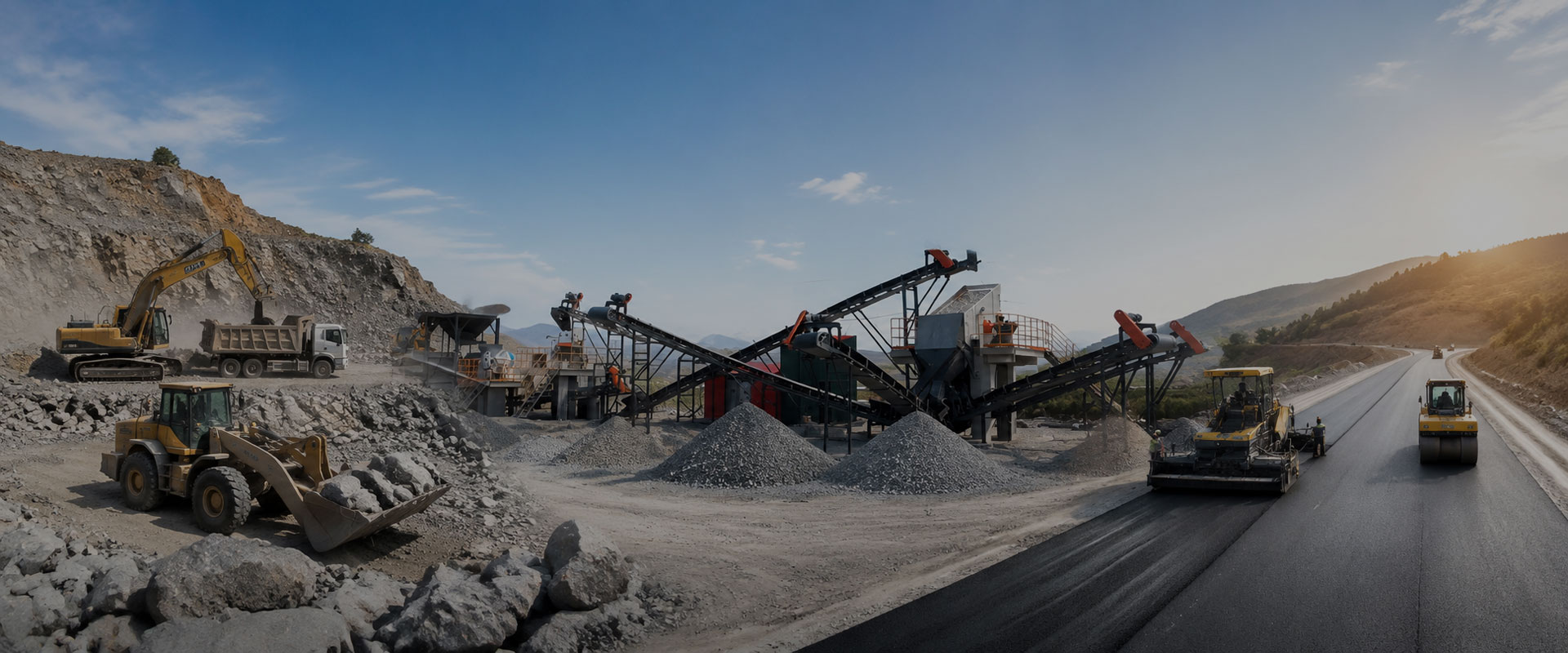
Stockpiles are an operational component of a quarry crushing plant, not simply storage areas at the end of the production line. Their location, capacity, separation, stacking method, and reclaiming strategy influence material flow, product quality, equipment utilization, and dispatch efficiency. In road aggregate production, where consistent products may need to be available throughout a project, these factors become particularly important. A well-designed rock crushing plant or gravel crushing plant therefore considers stockpile capacity and movement patterns alongside crushers and screens, creating a production system that can continue operating even when extraction and customer demand fluctuate.