Site preparation rarely loses time in one dramatic event. More often, productivity erodes through a succession of small delays: excavated rock waits for transport, trucks queue at loading points, suitable aggregate must be sourced from another location, and oversized material returns for additional processing. These interruptions become particularly consequential on projects where the material being excavated can be reused directly as construction aggregate. Without an on-site track crusher, contractors may spend substantial time moving material that could otherwise be processed where it is generated.
A track crusher changes this logistical equation by bringing crushing capability directly into the working area. Instead of treating excavation, material hauling, crushing, and site preparation as isolated activities, the equipment can connect them into a more compact production chain. The value is therefore not limited to crushing speed. It lies in reducing unnecessary material movement and shortening the distance between excavation and usable aggregate.
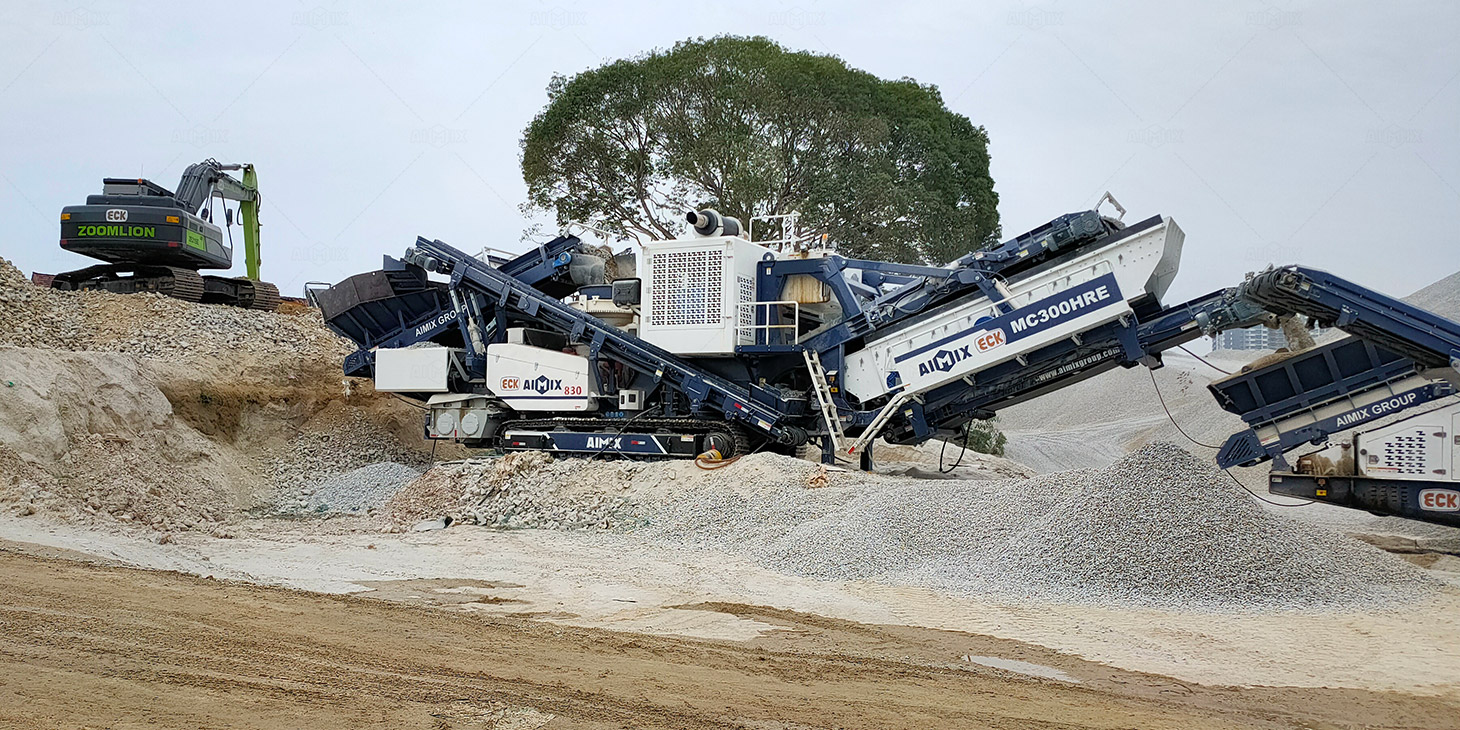
Where Material Hauling Creates Hidden Delays in Site Preparation
Moving Raw Material Away From the Excavation Zone
One of the first sources of lost time occurs when excavated rock cannot be processed near the point where it is generated. Material must be loaded, hauled to a crushing facility, processed, and potentially transported back to the construction area.
This creates a circular logistics pattern.
Every additional movement requires trucks, loading equipment, operators, fuel, and road access. The material itself does not become more valuable simply because it has traveled farther. In many cases, the journey merely adds handling time.
For large earthworks, this inefficiency can accumulate rapidly. Hundreds or thousands of truck movements may be required before sufficient aggregate is available for subsequent construction activities.
Truck Queues Can Interrupt the Excavation Cycle
Hauling efficiency depends on synchronization. Excavators need available trucks, while trucks need a clear route and a receiving location. If any part of this sequence becomes congested, the entire cycle slows.
Waiting at Loading and Unloading Points
An excavator standing idle because no truck is available represents lost productive capacity. Conversely, trucks waiting for loading or unloading consume fuel and labor without generating useful output.
A remote crushing arrangement can amplify these problems because haul routes are longer and the number of transport cycles increases.
External Crushing Adds Another Operational Layer
When aggregate processing takes place away from the construction site, contractors must coordinate production with transportation. The mobile crushing plant may have its own schedule, stockpile limitations, maintenance periods, and material requirements.
Site preparation becomes dependent on an external production rhythm.
That dependency can be particularly troublesome when the project requires aggregate at irregular intervals rather than at a steady industrial rate.
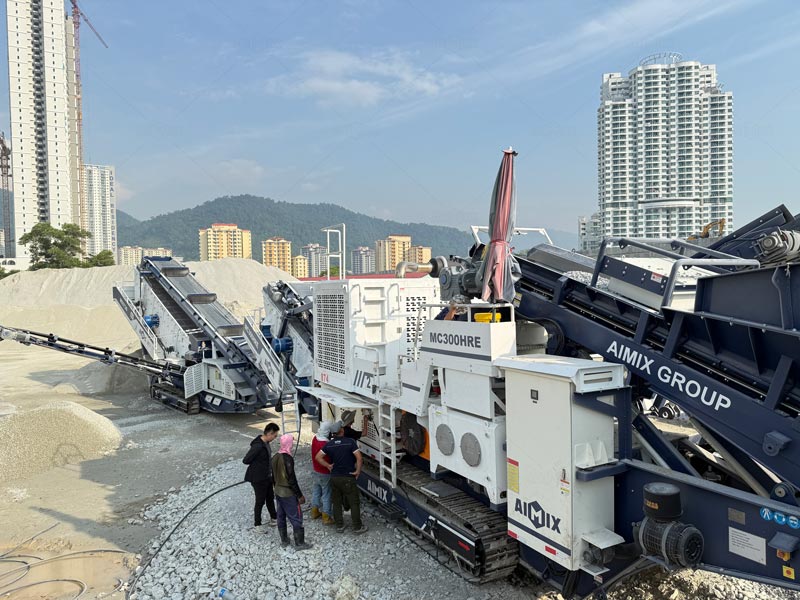
How a Track Crusher Shortens the Material-Processing Chain
Processing Material Near Where It Is Excavated
A track crusher can move directly toward the material source. Its tracked undercarriage allows the crushing unit to reposition within the project area without requiring the same level of fixed infrastructure associated with a stationary crushing plant.
The significance is logistical.
Instead of transporting every fragment of excavated rock to a remote crusher, the crusher travels toward the material. The processing point therefore moves closer to the excavation operation.
This can substantially reduce haul distance and the number of truck cycles required.
Turning Excavated Material Into Usable Aggregate Earlier
Site preparation often requires aggregates for road bases, drainage layers, embankment construction, temporary access roads, and other works. If suitable rock is already available on the project site, crushing it locally can accelerate the transition from raw excavation material to usable construction material.
Reducing the Gap Between Excavation and Reuse
The conventional sequence may look like:
Excavate → haul → stockpile → crush → haul again → use.
An on-site track crusher can compress this into a more direct chain:
Excavate → crush → use or stockpile nearby.
The difference is not merely conceptual. Every eliminated haul cycle represents time that can be redirected toward excavation, grading, compaction, or other productive work.
Supporting Continuous Site Preparation
Track crushers can also help maintain a steadier material supply for downstream operations. As excavation progresses, the mobile rock crusher can process suitable material without requiring a separate material-transfer campaign.
This creates a more synchronized workflow between earthmoving and site preparation.
When crushing capacity is properly matched with excavation and placement requirements, aggregate production becomes part of the construction cycle rather than a separate logistical task.
Which Site Conditions Benefit Most From On-Site Crushing
Remote and Linear Construction Projects
Track crushing becomes particularly advantageous when the project stretches across a large geographic area. Road construction, railway development, pipeline corridors, and other linear infrastructure projects can encounter suitable rock at multiple locations.
Transporting raw material from each excavation zone to one centralized crusher can create substantial haul distances.
A mobile track crusher can instead follow the work front. The processing unit effectively becomes part of the advancing construction operation.
Projects With Difficult Haul Routes
Terrain can transform a short distance into a costly transportation problem. Steep grades, temporary roads, narrow access routes, soft ground, or congested work zones can all reduce truck productivity.
Shorter Haul Distances Reduce More Than Travel Time
Reducing haul distance can also reduce fuel consumption, vehicle wear, road maintenance, and traffic interference within the project. The cumulative effect can be significant even when the nominal crushing capacity remains unchanged.
This is why track crusher productivity should not be evaluated solely by tons per hour.
A machine processing material close to the excavation zone may create more overall project value than a higher-capacity stationary crusher plant located several kilometers away.
Projects With Reusable Rock and Concrete Materials
On-site crushing is especially compelling when excavated rock, demolition concrete, or other suitable materials can be converted into aggregates for reuse.
Instead of treating these materials as waste requiring disposal, contractors can incorporate them into the project’s material cycle where specifications permit.
This can reduce both disposal requirements and the demand for newly quarried aggregate.
How to Evaluate Time Savings Beyond Crusher Output
Measure the Entire Material Cycle
A meaningful comparison should begin with the complete material journey rather than the crusher itself. Relevant factors include loading time, haul distance, truck cycle time, unloading, stockpiling, secondary handling, and final placement.
For example, a crusher with a lower nominal output may still improve project productivity if it eliminates several kilometers of hauling and multiple material transfers.
The decisive metric is therefore not simply crushing capacity. It is how quickly excavated material becomes usable material at the required location.
Consider Equipment Coordination and Downtime
Time savings also depend on how many machines must be synchronized. A separate crushing operation requires coordination among excavators, loaders, haul trucks, the crushing plant, and downstream equipment.
A track crusher can simplify this arrangement by bringing processing closer to the excavation cycle.
Reducing Idle Time Across the Fleet
When material flows smoothly from excavation to crushing and then toward placement, equipment utilization can become more balanced. Excavators spend less time waiting for trucks, trucks perform fewer unnecessary cycles, and aggregate reaches the construction zone with fewer interruptions.
This is the real strategic value of a track crusher.
It does not merely crush rock. It can restructure the material flow of the entire site.
From Crushing Equipment to Construction Workflow Optimization
The strongest case for a track crusher emerges when site preparation is viewed as a connected production system rather than a collection of individual tasks. Excavation creates material, crushing changes its physical form, and site preparation consumes that material. If transportation separates these stages, time accumulates in the gaps.
A track crusher closes those gaps.
By processing material closer to where it is excavated and where it will ultimately be used, the machine can reduce hauling, shorten material cycles, and improve coordination between earthmoving and aggregate production. For remote, linear, space-constrained, or material-intensive projects, this can turn on-site crushing from an equipment choice into a workflow strategy.
The central question is therefore not simply how fast a crusher can process rock. It is how much unnecessary movement can be removed from the entire construction process. When that question is answered correctly, the time saved between excavation and site preparation can be more valuable than the crushing capacity printed on a specification sheet.
“`