Producing 0–5 mm, 5–10 mm, and 10–20 mm aggregates from the same feed requires more than simply adding a screen after a crusher. The crushing stages must generate a suitable particle-size distribution, while the screening circuit must separate and return material efficiently. A well-designed mobile crushing and screening plant therefore needs to match the crusher type, feed characteristics, screen configuration, and required product sizes.
Start With the Required Aggregate Sizes
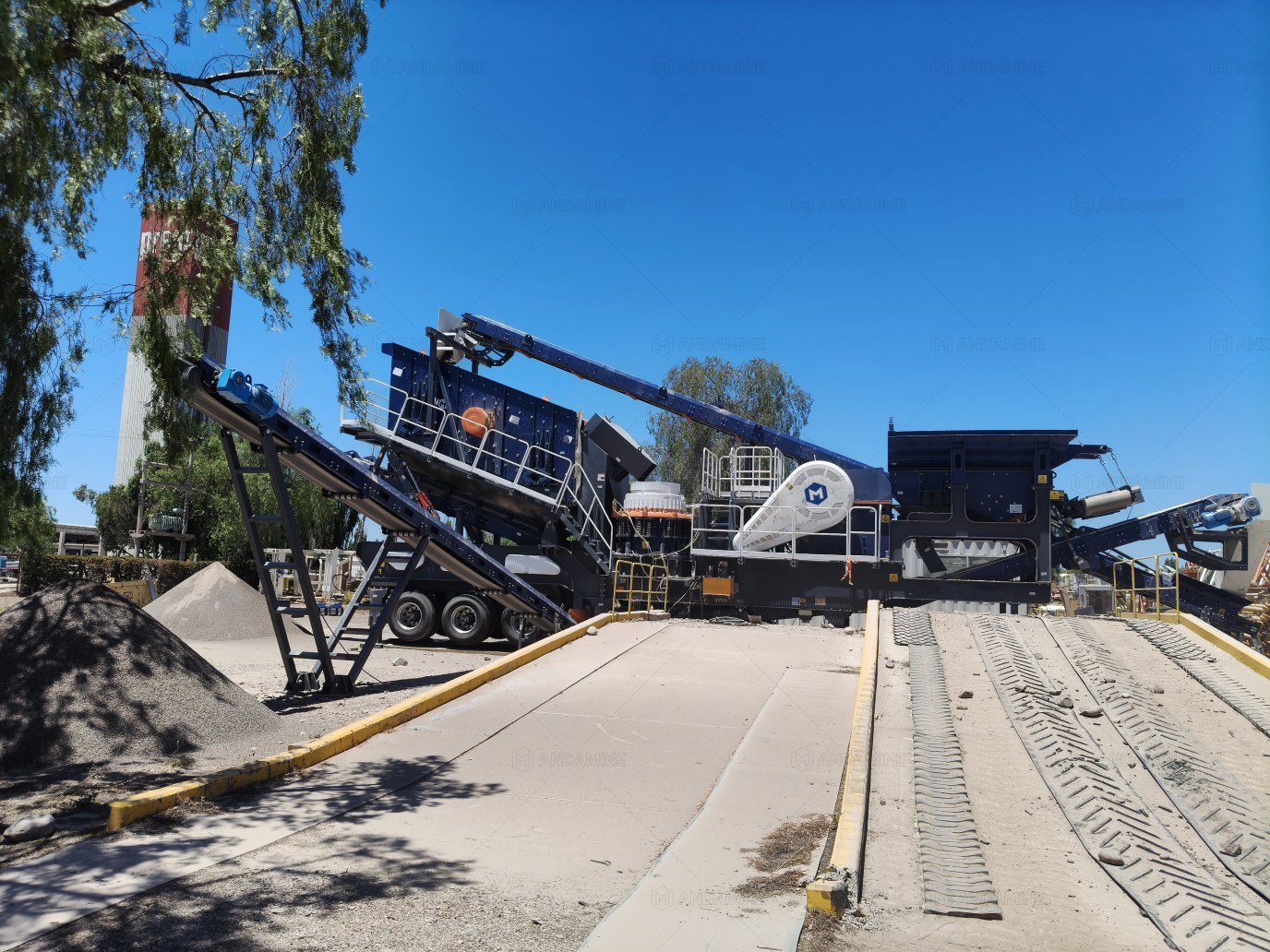
Before selecting equipment, define exactly which finished products the project needs. A three-size specification such as 0–5 mm, 5–10 mm, and 10–20 mm requires the screening system to make clear separation cuts at approximately 5 mm and 10 mm, while material above 20 mm must either be returned for further crushing or handled as oversize.
The required products also determine how the screen should be configured. A multi-deck vibrating screen can separate several size fractions in one screening stage, but the screen must have sufficient area and screening efficiency for the planned throughput.
For example, a typical arrangement may use:
- 0–5 mm: Fine aggregate or manufactured sand fraction
- 5–10 mm: Smaller coarse aggregate
- 10–20 mm: Larger coarse aggregate
- Above 20 mm: Oversize returned to the crusher
The actual cut points should be established according to the required product specification rather than simply using nominal screen sizes.
Match the Crushing Stage to the Feed Material
The screening circuit cannot compensate for an unsuitable crushing process. The crusher should produce a feed distribution that allows the screen to separate the required sizes efficiently.
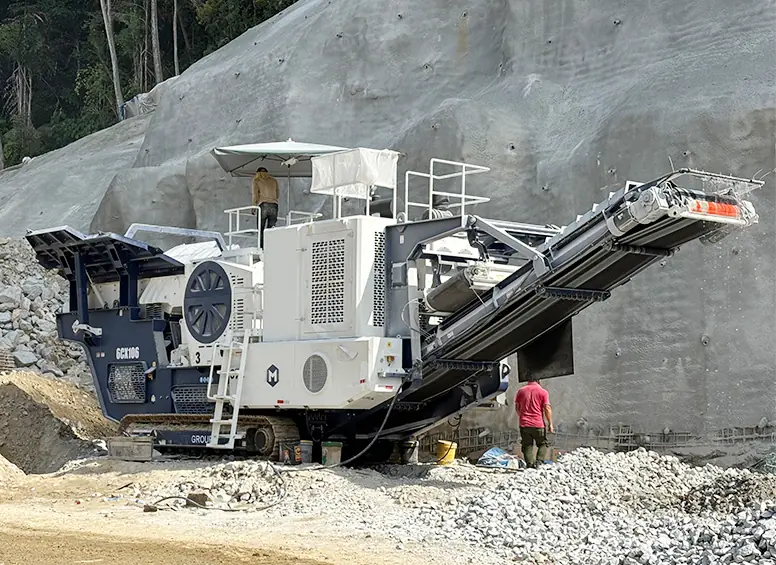
A mobile jaw crushing plant is commonly used as the primary crushing stage when the feed contains large and hard rock. It reduces large stones into a more manageable size for secondary crushing and screening.
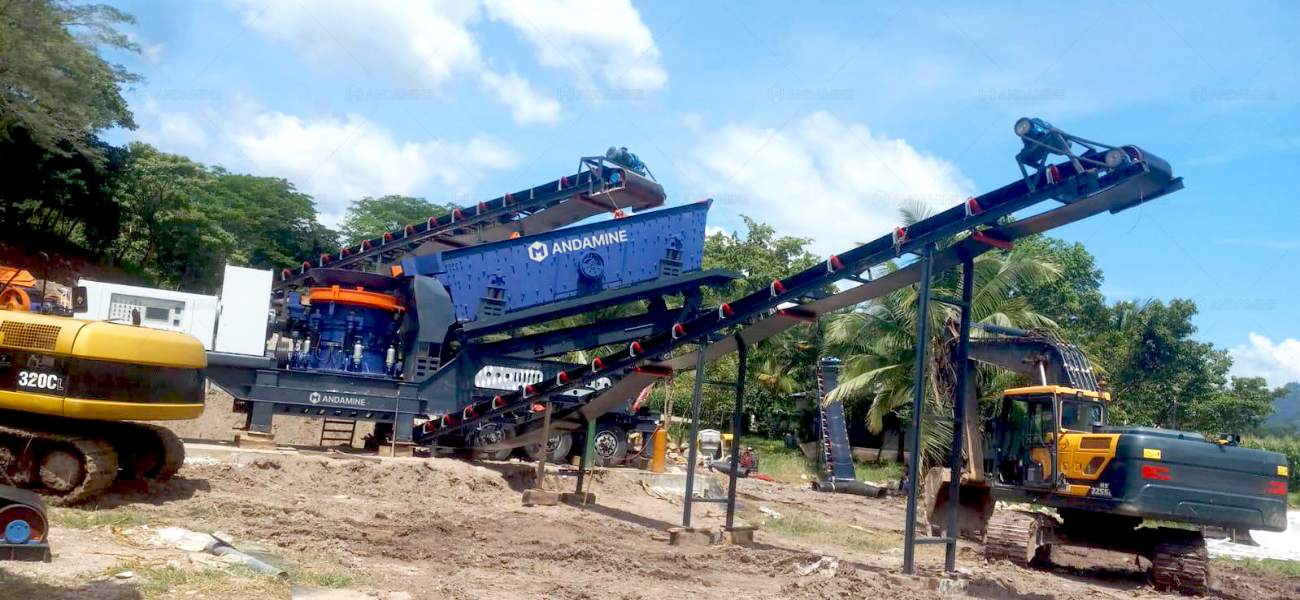
For harder materials such as granite, basalt, and river stone, a mobile cone crushing plant can be used as a secondary or tertiary crushing stage. Cone crushing is particularly useful when the plant needs to reduce material to a controlled size before final screening.
A mobile impact crushing plant may be suitable when aggregate shape is important or when processing softer to medium-hard materials. Impact crushing can produce a higher proportion of cubical particles, which may be useful for certain aggregate specifications.
The choice should therefore depend on feed size, hardness, abrasiveness, required product shape, and final aggregate sizes.
Use Screening to Control the Final Product Sizes
The screen is responsible for separating the crushed material into the required fractions. For three finished products, a three-deck or appropriately configured multi-deck screen can provide separate discharge streams.
Material entering the screen is stratified as it moves across the screening surface. Smaller particles pass through earlier decks, while larger particles continue toward the appropriate discharge point.
A simplified flow can be:
Crusher → Vibrating Screen → 0–5 mm + 5–10 mm + 10–20 mm + Oversize
The screen opening sizes should be selected according to the actual particle-size specification. For example, a screen intended to produce 5–10 mm material needs to separate particles below approximately 5 mm from those within the target range while also preventing excessive oversize from entering the product.
Screen performance can also be affected by moisture, particle shape, material loading, and feed distribution. Wet or sticky material may reduce screening efficiency and cause blinding, while excessive feed loading can increase the amount of misplaced material.
Decide Whether a Closed-Circuit Layout Is Needed
If the feed contains a significant amount of material larger than the required maximum size, a closed-circuit mobile crushing and screening plant can return oversize material to the crusher.
A typical closed circuit is:
Primary Crusher → Secondary Crusher → Screen → Finished Products + Oversize Return
The screen separates material at the required sizes, while particles above the specified maximum are sent back for additional crushing. This approach helps prevent oversize material from entering the final aggregate stockpiles.
For projects requiring 0–5 mm, 5–10 mm, and 10–20 mm products, the return circuit is particularly important when the final 10–20 mm product must have strict upper-size control.
Consider a Multi-Stage Mobile Crushing and Screening Plant
The number of crushing stages depends largely on the feed size and the required reduction ratio.
For large quarry feed, a mobile jaw crushing plant can serve as the primary stage, followed by a mobile cone or impact crusher and a mobile screening unit. This configuration provides greater control over the reduction process.
A common hard-rock arrangement is:
Mobile Jaw Crusher → Mobile Cone Crusher → Mobile Screening Plant → Finished Aggregates
For less abrasive rock where aggregate shape is a priority, an alternative may be:
Mobile Jaw Crusher → Mobile Impact Crusher → Mobile Screening Plant
In smaller projects, a single crushing stage combined with screening may be sufficient if the feed size and required products are compatible with the crusher’s reduction capability.
Balance Screen Capacity With Crusher Output
The screening plant should be able to handle the material produced by the crusher without becoming the production bottleneck.
If the crusher produces more material than the screen can process, material may accumulate, reducing overall plant efficiency. Conversely, an oversized screening system may add unnecessary equipment cost without improving production.
The practical design should therefore consider:
- Required finished aggregate production
- Crusher operating capacity
- Screen effective screening area
- Percentage of material in each size fraction
- Oversize return rate
- Material moisture and particle shape
- Number of required product sizes
The key is to size the crushing and screening stages as one production system rather than selecting each machine independently.
Build the Circuit Around the Final Products
For projects requiring 0–5 mm, 5–10 mm, and 10–20 mm aggregates, the most important design decision is not simply which crusher has the highest capacity. The complete circuit must consistently produce the required size fractions while controlling oversize and fines.
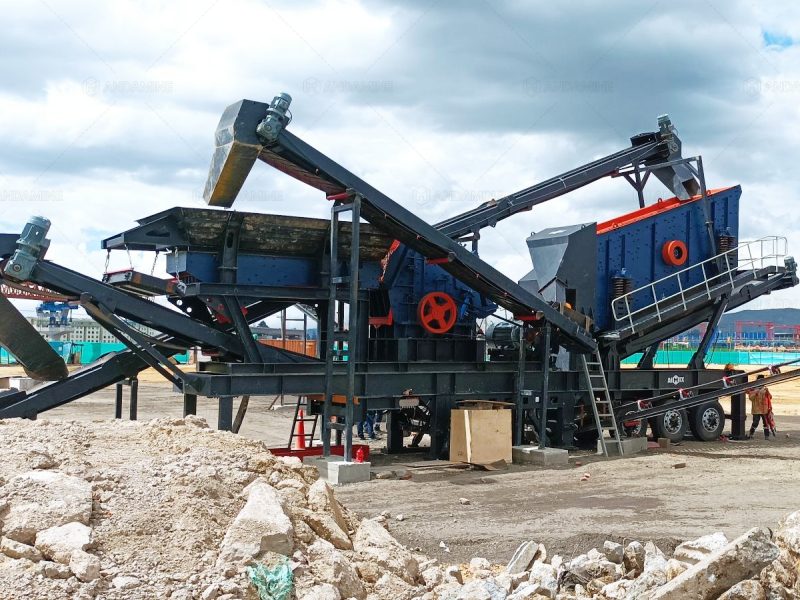
A properly configured mobile crushing and screening plant may combine a mobile jaw crushing plant for primary reduction, a mobile cone crushing plant for controlled secondary crushing, or a mobile impact crushing plant where aggregate shape is important, followed by multi-deck screening and oversize recirculation.
By starting with the required aggregate sizes and working backward through screening, crushing, and feed preparation, the plant can be configured around actual production requirements rather than nominal equipment specifications.