Choosing the right concrete batching plant depends heavily on project duration, concrete demand, site conditions, mobility requirements, and long-term production plans. Temporary projects often benefit from flexible equipment that can be installed, relocated, and dismantled efficiently, while permanent projects generally require stable, high-capacity production systems with durable infrastructure. Understanding the differences between a stationary concrete batching plant and a mobile concrete batching plant can help contractors select a configuration that balances productivity, investment, and operational flexibility.
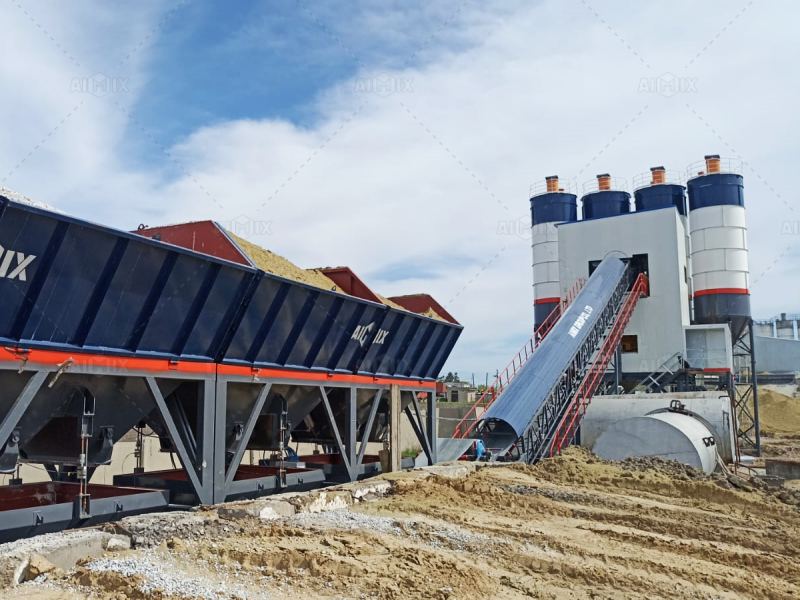
What Defines a Temporary or Permanent Concrete Project?
Temporary concrete projects typically have a limited construction period or involve multiple work locations. Examples include road construction, bridge sections, temporary infrastructure, mining projects, and remote construction sites. Once a particular construction phase is completed, the concrete production facility may no longer be needed at the same location.
Permanent projects have a longer operational cycle and usually require continuous concrete production from a fixed location. Commercial ready-mix concrete businesses, large residential developments, industrial facilities, dams, and major infrastructure projects may require stable concrete supply for several years. In these situations, investing in a fixed production facility can provide greater long-term value.
Stationary Concrete Batching Plant for Permanent Projects
A stationary concrete batching plant is designed to operate from a fixed location for an extended period. It is commonly selected for large-scale construction projects and commercial concrete production where high output, stable operation, and substantial material storage are important.
Because the plant does not need to be relocated frequently, contractors can establish permanent aggregate storage areas, cement silos, access roads, control rooms, and other supporting infrastructure around the plant. This allows the production system to be optimized for long-term operation. Stationary plants can also be configured with larger aggregate storage and higher production capacities when project demand is substantial.
Another advantage is production stability. Once the plant has been installed and commissioned, operators can establish standardized workflows for material feeding, weighing, mixing, loading, and dispatch. This makes stationary systems particularly suitable when concrete must be supplied continuously to multiple construction sites or when a project requires large quantities of concrete over an extended period.
Mobile Concrete Batching Plant for Temporary Projects
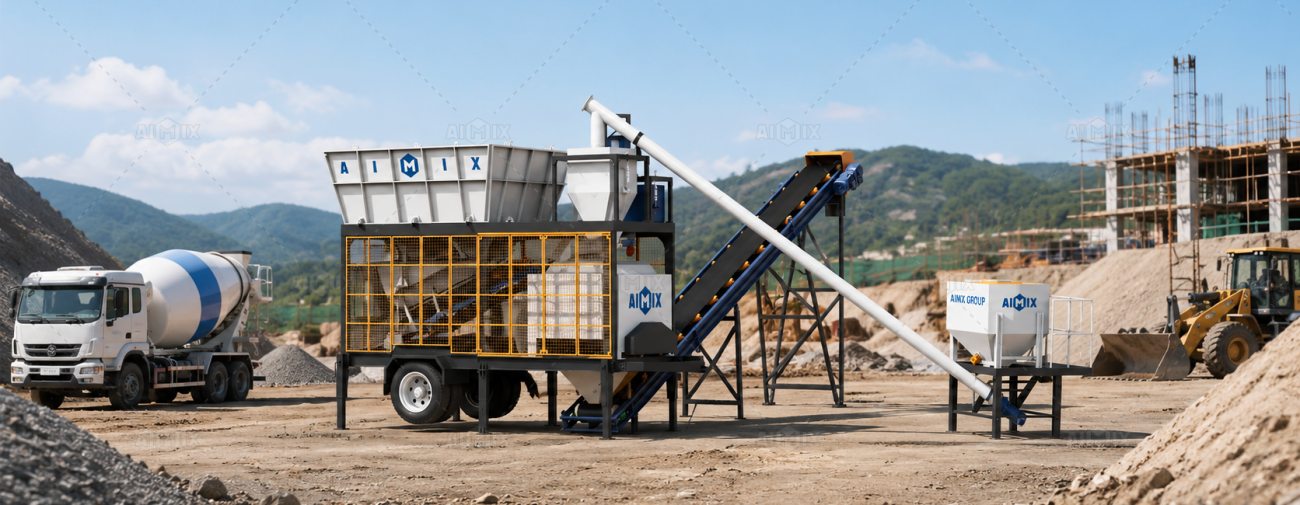
A mobile concrete batching plant is designed with transportation and relocation in mind. Its compact and modular configuration allows contractors to move the plant between different working areas as construction progresses.
This flexibility is especially useful for temporary projects. For example, a road project may extend across several kilometers, while a mining project may move from one extraction area to another. Instead of transporting fresh concrete over long distances from a fixed plant, a mobile system can be positioned closer to the active construction zone.
Reducing transportation distance can improve concrete delivery efficiency and potentially lower fuel and truck operating costs. It can also help contractors maintain a more predictable supply of fresh concrete when access to commercial ready-mix suppliers is limited.
Installation and Relocation Requirements
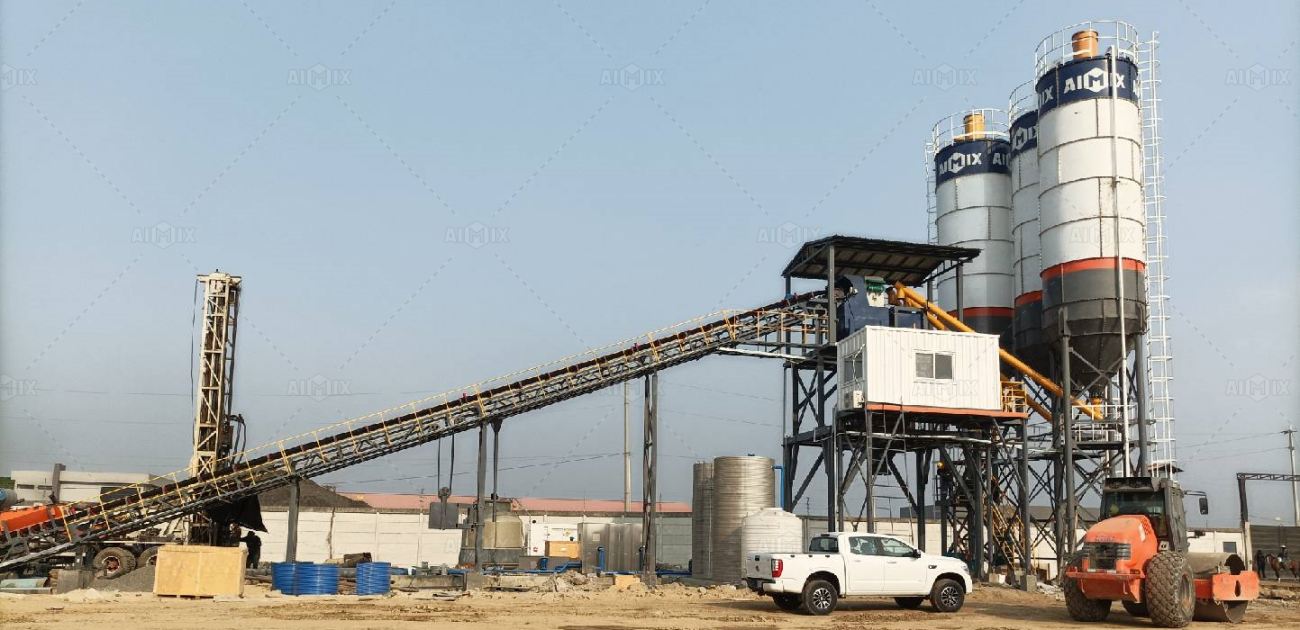
Installation requirements are an important factor when comparing plant types. A stationary plant normally requires more extensive site preparation, including foundations, aggregate storage areas, material handling systems, and supporting infrastructure. Although this requires greater initial preparation, the investment can be justified when the plant will operate at the same location for many years.
Mobile plants generally require less permanent infrastructure and can be designed for faster installation and relocation. This makes them attractive for projects where the production site may change. However, mobile does not mean that no site preparation is required. Contractors still need to provide a suitable working surface, material storage, power or fuel supply, water, and safe truck access.
Compare Production Capacity with Actual Demand
Project duration alone should not determine the plant type. Concrete demand is equally important. A temporary project with very high concrete consumption may still require a relatively large production system, while a permanent project with low demand may not justify a high-capacity stationary plant.
Contractors should estimate average and peak concrete demand before selecting equipment. If a project requires continuous high-volume production, a stationary configuration may provide better long-term operating efficiency. If demand is moderate and the construction location changes frequently, a mobile configuration may offer a better balance between capacity and flexibility.
Cost Considerations for Different Project Types
The purchase price should not be the only consideration when comparing batching plant types. Contractors should calculate the total project cost, including transportation, site preparation, installation, relocation, labor, maintenance, energy, and equipment utilization.
A stationary plant may require a higher initial investment in foundations and infrastructure, but these costs can be spread over many years of operation. A mobile plant may reduce installation and relocation expenses, especially when the project has several working locations. However, repeated relocation still creates transportation and setup costs that should be included in the project budget.
Concrete Transportation and Site Logistics
The location of the batching plant has a direct effect on concrete delivery. For permanent projects with a fixed construction area, a stationary plant can be positioned strategically to provide continuous concrete supply. It can also serve multiple projects when operated as a commercial ready-mix facility.
For temporary or linear projects, a mobile concrete batching plant can reduce the distance between production and placement. Shorter transportation routes can help reduce truck cycle times and make it easier to coordinate concrete production with pumps, pavers, and other placement equipment.
How to Choose the Concrete Batching Plant
When deciding how to choose the concrete batching plant, contractors should evaluate several factors rather than selecting equipment based only on price or nominal capacity. Project duration, concrete demand, site conditions, available space, transportation distance, relocation frequency, installation requirements, and future expansion plans should all be considered.
For a long-term project at one fixed location, a stationary concrete batching plant is generally the more practical option when stable and high-volume production is required. For temporary, remote, or multi-location projects, a mobile concrete batching plant can provide greater flexibility and reduce the need for long-distance concrete transportation.
Contractors should also consider whether the plant will be used after the current project ends. If the equipment can be reused on future construction sites, the mobility and relocation capabilities of a mobile plant may increase its overall value. Conversely, if the plant will support an ongoing commercial concrete operation, the long-term productivity of a stationary system may be more important.
Temporary vs. Permanent Projects: Which Plant Makes More Sense?
There is no universal answer because the best plant depends on the relationship between project requirements and equipment capabilities. Temporary projects generally favor mobility, fast setup, and flexible deployment, making a mobile concrete batching plant a practical choice. Permanent projects typically prioritize high production capacity, stable operation, large material storage, and long-term infrastructure, making a stationary concrete batching plant more suitable.
However, contractors should look beyond the simple temporary-versus-permanent distinction. A large temporary infrastructure project may require a high-capacity plant, while a small permanent project may benefit from a compact system. The most suitable solution is the one that matches the actual production demand, project lifecycle, site conditions, logistics, and total cost of ownership.
Conclusion
Selecting between different types of concrete batching plant requires a complete assessment of project duration, production capacity, mobility, site conditions, logistics, and long-term investment value. A stationary concrete batching plant is well suited to permanent projects that need stable, high-volume production from a fixed location, while a mobile concrete batching plant offers greater flexibility for temporary, remote, and multi-location construction. By understanding these differences and applying a systematic approach to how to choose the concrete batching plant, contractors can select a production system that supports efficient concrete supply throughout the entire project lifecycle.