Construction activity across the Middle East generates substantial quantities of concrete debris from demolition, renovation, road reconstruction, and infrastructure development. Traditionally, this material is loaded onto trucks and transported away from the construction site for disposal or external processing. While straightforward, this approach can create a cumbersome logistics chain, particularly when disposal facilities are located far from rapidly developing construction zones. On-site concrete crushing offers a different model: process suitable demolition concrete where it is generated, then reuse the recovered aggregate within the same project or nearby applications.
This approach changes construction waste from a disposal burden into a usable material stream. A track crusher or other mobile crushing equipment can be moved directly to the work area, while a concrete crusher machine can reduce large demolition fragments into more manageable aggregate sizes. When appropriately designed and managed, this can reduce hauling requirements, improve material utilization, and make construction waste recycling more practical on projects where transportation represents a significant portion of waste disposal activity.
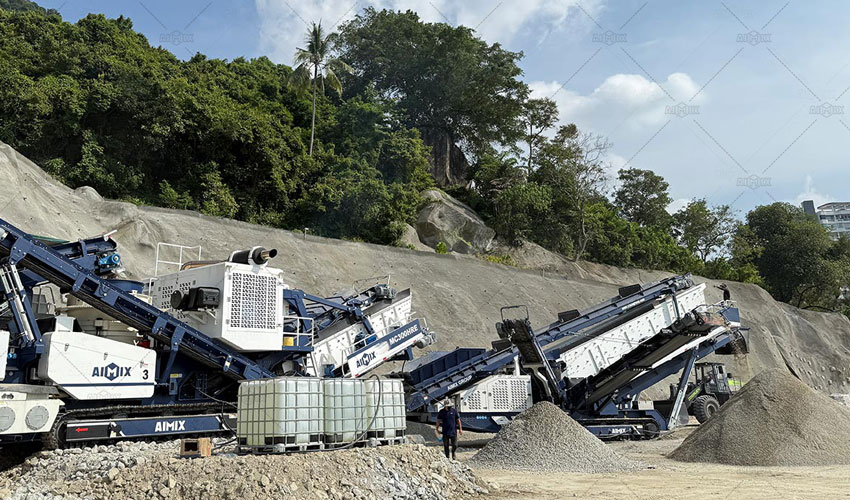
How On-Site Concrete Crushing Changes Construction Waste Logistics
Reducing the Distance Between Demolition and Processing
The conventional waste-handling process often follows a simple sequence: demolition, loading, transportation, disposal, and sometimes secondary processing. Every additional movement requires trucks, fuel, labor, and coordination.
On-site crushing removes one important link from this chain. Instead of immediately transporting bulky concrete fragments away from the project, contractors can establish a temporary crushing area near the demolition zone. The material is reduced in size before transportation, or it can be reused directly on the site when project specifications permit.
This distinction matters because crushed aggregate occupies the same physical material mass but can be substantially more convenient to handle and reuse than irregular demolition fragments.
Lowering the Number of Waste-Hauling Trips
Large pieces of reinforced concrete can consume considerable truck space relative to their eventual aggregate value. Transporting unprocessed demolition debris means paying to move material before its useful characteristics have been recovered.
A concrete crusher machine changes the equation by processing the material before it enters the wider transportation network. Depending on the project, recycled concrete aggregate can be used for temporary roads, working platforms, backfilling, sub-base applications, or other suitable purposes.
Why Fewer Truck Movements Matter
Reducing waste-hauling trips can provide several practical advantages. Fuel consumption can decrease, truck scheduling becomes less complicated, and traffic around the construction site can be reduced.
In dense urban developments, this can be particularly valuable. Fewer waste trucks entering and leaving a site can simplify access management and reduce interference with other construction activities.
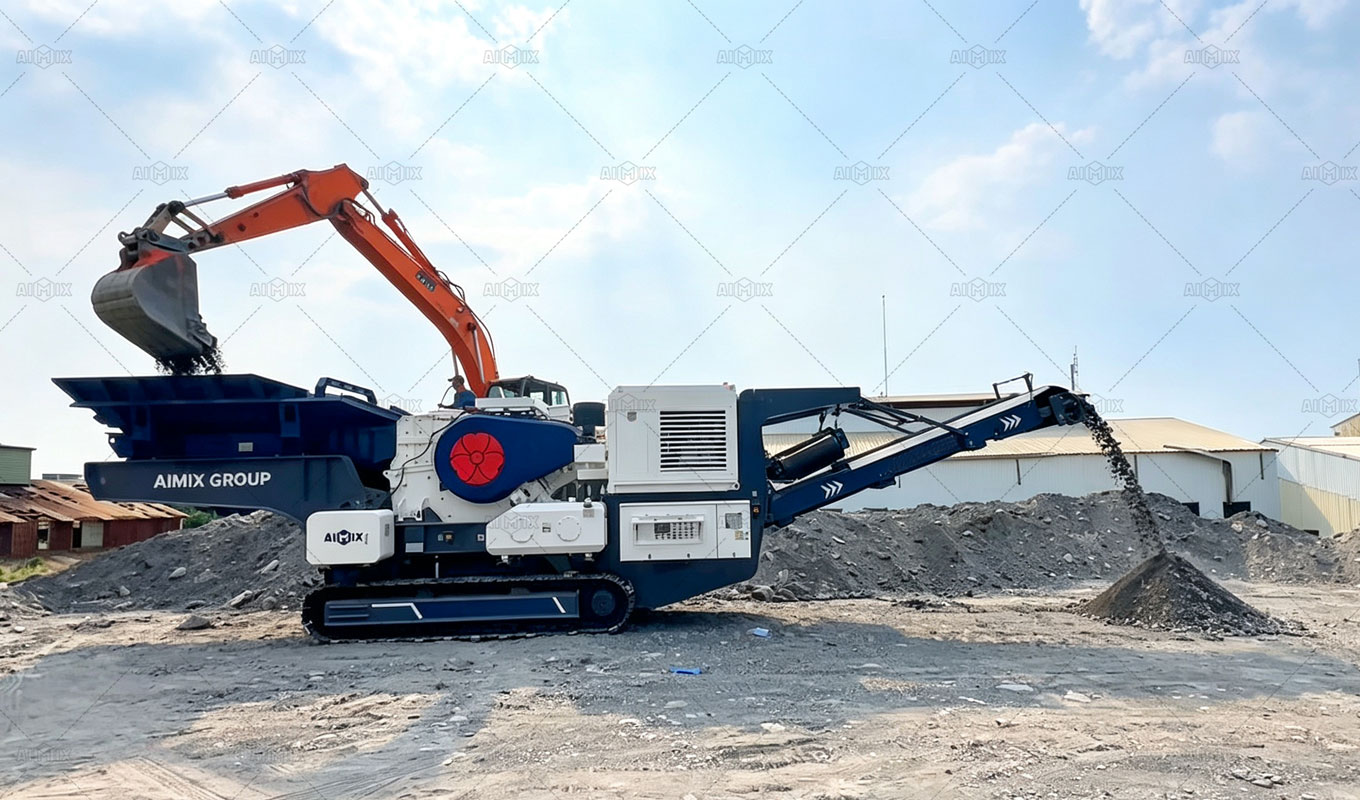
Why Mobile Crushing Equipment Fits Middle Eastern Construction Conditions
Track Crushers Bring Processing Directly to the Work Zone
A track crusher is particularly suitable for projects where demolition and construction activities occur across changing locations. Its tracked undercarriage allows the crushing unit to move around the site without requiring a conventional fixed foundation.
This mobility is useful for large-scale developments, road reconstruction, quarry-adjacent construction, and demolition projects where the material source changes as work progresses.
Rather than creating a permanent waste-processing station, contractors can reposition the crusher according to the current work front.
Mobile Impact Crushers Offer a Practical Option for Concrete Recycling
A mobile impact crusher can be advantageous when processing concrete demolition waste where reduction ratio, particle shape, and material reuse are important considerations. Impact crushing uses repeated impact forces to break concrete into smaller particles.
For suitable feed material and properly configured equipment, the resulting aggregate can be directed toward downstream screening and separation processes.
The objective is not simply to make the concrete smaller. It is to produce a recycled material with characteristics appropriate for its intended application.
Processing Concrete Near Its Point of Generation
The closer the crushing process is to demolition activity, the less raw demolition waste needs to be hauled in its original bulky form. This can create a more rational material flow:
Demolition → Sorting → Crushing → Screening → Reuse or Stockpiling
Instead of:
Demolition → Loading → Long-Distance Hauling → Disposal → New Aggregate Transportation
The second model contains considerably more transportation activity.
Equipment Selection Must Follow Material Conditions
Not every demolition stream is immediately suitable for crushing. Concrete may contain reinforcing steel, embedded materials, soil, timber, plastics, or other contaminants.
Pre-sorting is therefore essential. Oversized steel components and unsuitable materials should be removed before crushing, while magnetic separation can help recover ferrous metal after or during processing.
The choice between a mobile impact crusher and jaw crusher, or other configuration should depend on feed size, concrete characteristics, required output size, capacity, and downstream use.
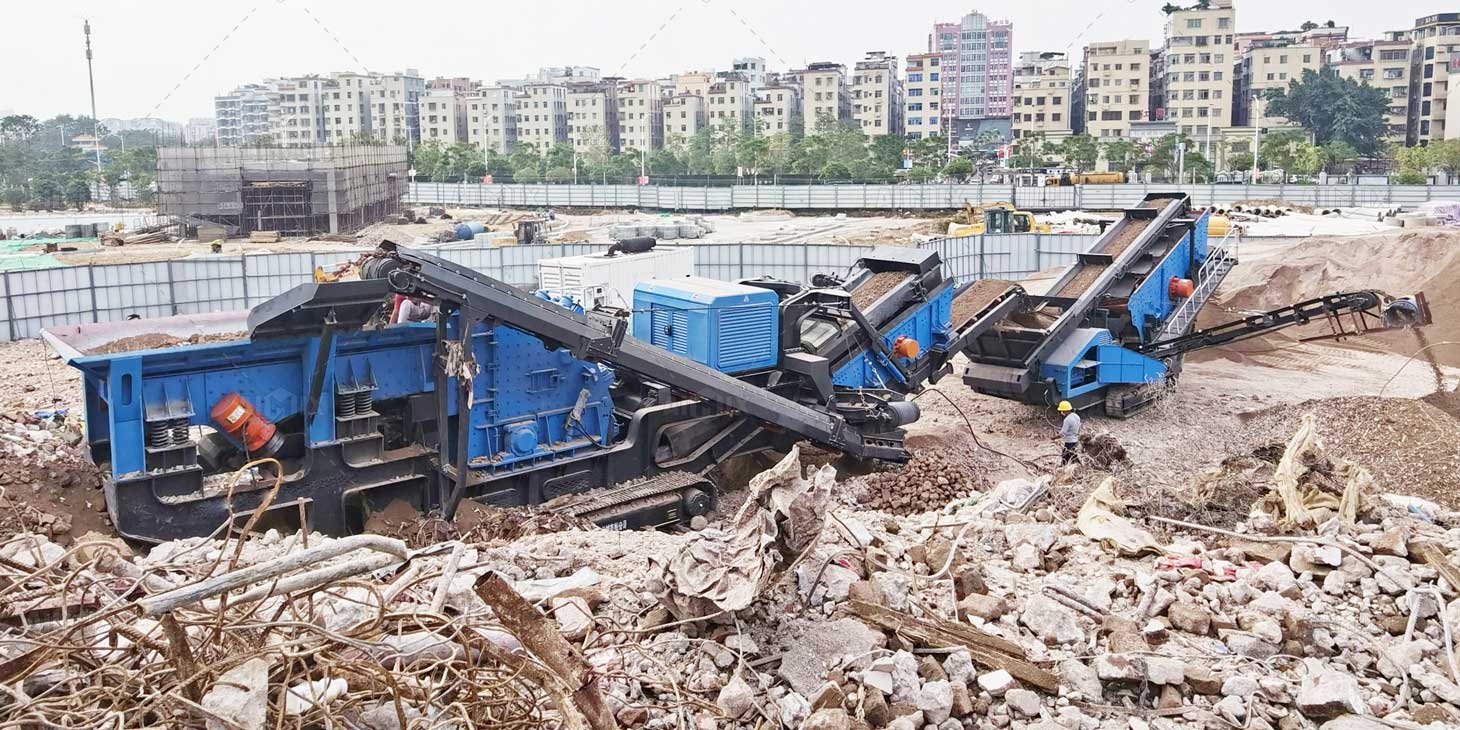
How Concrete Crushing Supports Construction Waste Recycling and Waste Disposal Strategies
Turning Demolition Material Into a Local Aggregate Resource
The economic logic of construction waste recycling becomes stronger when recycled material can replace part of the aggregate otherwise brought into the project from external sources.
Crushed concrete may be suitable for selected applications such as road base, sub-base, filling, drainage layers, temporary access roads, and working platforms, subject to local technical specifications and quality requirements.
This creates a circular material flow within the construction site. Concrete removed from one structure can become a useful input for another stage of development.
Reducing Pressure on Waste Disposal Facilities
Traditional waste disposal depends on available landfill or waste-processing capacity. Rapid construction activity can place additional pressure on these facilities, particularly when large quantities of concrete are generated simultaneously.
On-site crushing does not eliminate the need for regulated waste disposal. Some materials will still require off-site treatment, and contaminated or unsuitable waste must be handled according to applicable regulations.
However, processing reusable concrete locally can reduce the volume of material that ultimately requires disposal. This distinction is crucial: effective waste management is not synonymous with sending everything away.
Improving the Economics of Construction Waste Handling
Waste hauling involves more than the cost of a truck. Expenses can include loading, fuel, driver labor, tipping fees, transport distance, traffic delays, and administrative coordination.
When a mobile crushing plant is introduced, some of these costs can be replaced by local processing. The economic result depends on the quantity of concrete waste, project duration, crushing capacity, available reuse opportunities, and distance to disposal or aggregate sources.
When On-Site Crushing Becomes Particularly Attractive
On-site crushing tends to become more compelling when several conditions overlap:
– Large volumes of concrete demolition waste are generated.
– Disposal facilities are relatively distant.
– Recycled aggregate has a practical application on the project.
– The construction site provides sufficient space for crushing and stockpiling.
– Material can be effectively sorted before processing.
– Mobile equipment can operate safely within the site layout.
When these conditions exist, the crusher becomes more than a waste-processing machine. It becomes part of the site’s material logistics system.
Building a More Circular Material Flow
The strongest advantage of on-site concrete crushing is its ability to shorten the distance between waste generation and material recovery. Instead of treating demolished concrete as an endpoint in the construction process, crushing allows it to re-enter the material cycle.
For Middle Eastern construction sites, where major infrastructure, urban development, and redevelopment projects can generate substantial quantities of concrete debris, this approach can provide a practical pathway toward more efficient material management.
A track crusher can follow the demolition work. A concrete crusher machine can transform bulky fragments into usable aggregate. A mobile impact crusher can support localized processing where its crushing characteristics match the feed material and final product requirements. Together with sorting and screening equipment, these technologies can form a flexible construction waste recycling workflow.
The broader lesson is straightforward: waste disposal does not always have to begin with hauling. When concrete can be safely processed and reused close to where it is generated, transportation becomes a smaller part of the equation. On-site crushing therefore offers Middle Eastern contractors a way to reduce unnecessary waste-hauling movements while recovering value from demolition materials and creating a more resource-efficient construction operation.