A self-loading concrete mixer combines material loading, weighing, mixing, and transportation in one machine. Unlike conventional equipment that depends on separate loaders and mixers, a self-loading concrete mixer can move between material stockpiles and pouring locations, making it practical for construction sites with uneven ground, limited access, and changing work areas.
Its design is not just about combining functions. Ground clearance, traction, hydraulic control, and component protection all influence performance under demanding conditions. Understanding these features helps contractors evaluate a self-loading concrete mixer(hormigonera autocargable) for sale based on actual site requirements rather than specifications alone.
How Does the Chassis Handle Uneven Construction Ground?
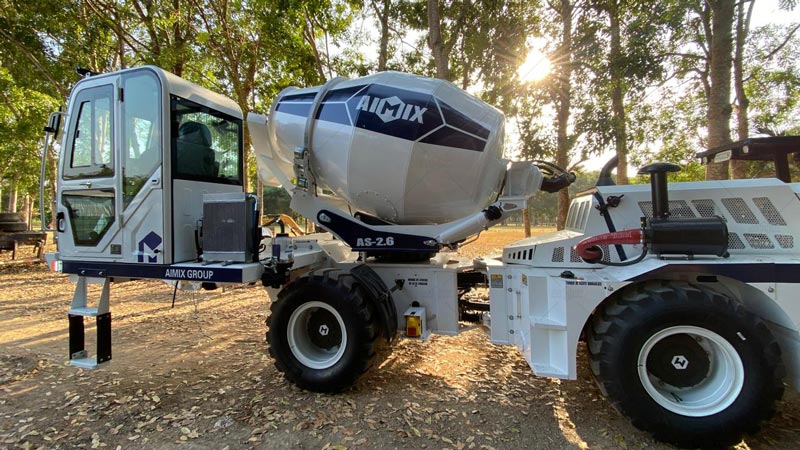
The chassis forms the structural foundation of a self-loading concrete mixer. On rough sites, it must support the machine’s weight, the concrete load, and dynamic forces generated when traveling over uneven surfaces.
Ground Clearance and Weight Distribution
Sufficient ground clearance helps prevent the chassis and underbody components from contacting rocks, ruts, and construction debris. A well-balanced layout also helps maintain stability as the machine travels between loading and pouring locations.
Key design considerations include:
- Structural strength: The chassis must withstand repeated loading cycles and vibration.
- Axle configuration: The drive arrangement should match the site’s gradients and traction requirements.
- Load distribution: The machine should remain stable when carrying aggregates, water, and mixed concrete.
- Turning capability: A suitable turning radius helps operators navigate narrow access roads and confined work areas.
These factors become particularly important on rural roads, hillside projects, and construction sites where permanent access routes have not yet been completed.
Tires and Traction
Tires provide the contact between the self-loading concrete mixer for sale(venta de autohormigonera) and the ground. Their tread pattern, load rating, and dimensions affect grip, flotation, and maneuverability.
Contractors working on muddy or loose surfaces should check tire specifications and ground conditions before selecting a machine. Four-wheel drive, where available, can improve traction, but it does not eliminate the need to assess slope limits and safe operating conditions.
Which Hydraulic Systems Support Rough-Site Operation?
Hydraulic systems operate several essential functions, including steering, bucket movement, drum rotation, and other working mechanisms, depending on the machine configuration.
Hydraulic Loading and Steering
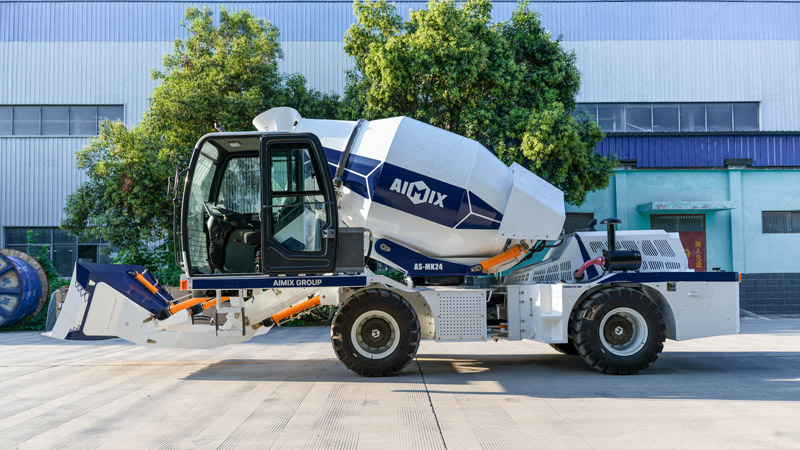
The front loading bucket allows operators to collect sand, gravel, and other ingredients without relying on a separate wheel loader. Hydraulic lifting and tilting mechanisms help transfer materials into the mixing drum.
For rough construction sites, responsive hydraulic controls can simplify material handling when stockpiles are positioned on uneven ground. However, actual performance depends on hydraulic pressure, flow capacity, component quality, and the machine’s rated operating limits.
Drum Rotation and Discharge
The mixing drum must rotate consistently during production and discharge. Reliable hydraulic drive components help maintain the required mixing action as the machine moves between work areas.
Routine inspection of hoses, seals, connections, and hydraulic fluid helps identify leaks and wear before they interrupt production. On dusty sites, keeping hydraulic components clean is also important for reducing premature deterioration.
How Does the Mixing System Maintain Concrete Quality?
Rough terrain affects mobility, but concrete quality depends on accurate proportioning, effective mixing, and appropriate handling time.
Material Loading and Proportioning
The loading bucket simplifies aggregate handling, while the water supply and weighing or metering arrangements determine how ingredients are proportioned. Contractors should confirm the actual configuration of each model instead of assuming that every self-loading concrete mixer uses the same weighing system.
Consistent batching helps reduce variations between loads. Operators must also account for aggregate moisture, the specified water-cement ratio, and the requirements of the concrete mix.
Mixing Capacity and Working Cycle
The rated output of a self-loading concrete mixer is not necessarily the volume delivered every hour under real site conditions. Loading time, travel distance, mixing duration, discharge, and cleaning all affect practical productivity.
For projects with scattered pouring locations, a machine that can load and mix concrete directly at the worksite may reduce coordination between separate vehicles. Contractors should estimate production using the complete working cycle rather than drum capacity alone.
What Should Contractors Check Before Buying a Machine?
When comparing a self-loading concrete mixer for sale, buyers should evaluate the machine against the terrain, concrete demand, and transport limitations of their projects.
| Selection factor | What to evaluate |
|---|---|
| Terrain | Gradients, loose soil, mud, rocks, and access-road width |
| Production demand | Required concrete volume per hour and per shift |
| Mixing capacity | Effective output per batch and expected cycle time |
| Mobility | Drive configuration, ground clearance, and turning radius |
| Maintenance | Access to filters, hydraulic components, and replacement parts |
| Transportation | Overall dimensions, shipping configuration, and local road restrictions |
These checks help prevent a common purchasing mistake: choosing equipment based on maximum capacity while overlooking the conditions that determine actual output.
Evaluating the AS-MK24 Self-Loading Concrete Mixer
The AS-MK24 self-loading concrete mixer(AS-MK24 autohormigonera) is designed for contractors who need an integrated solution for material handling and concrete production. Its stated production capacity is 24 m³/h, based on a configuration that supports six 4 m³/h production units or cycles as specified by the manufacturer.
Its 6 m³ geometric drum capacity and 4 m³ effective capacity describe different measurements; the geometric volume should not be mistaken for usable concrete output per batch. Buyers should confirm the rated operating configuration and expected cycle time for their applications.
Before selecting this model for rough terrain, contractors should verify its drive configuration, ground clearance, tire specifications, maximum operating gradients, and applicable load limits. These details are more useful for determining site suitability than production capacity alone.
How Does Site Condition Affect the Self-Loading Concrete Mixer Price in Colombia?
The self-loading concrete mixer price in Colombia depends on more than the machine’s base specification. Configuration, shipping arrangements, import-related expenses, and after-sales support can all affect the total investment.
For projects in mountainous areas, remote municipalities, or locations with limited road access, buyers should consider:
- Equipment configuration: Drive system, bucket capacity, and optional features.
- Logistics: Freight costs, unloading requirements, and transport access to the project.
- Operating expenses: Fuel, routine maintenance, tires, and wear parts.
- Service availability: Technical assistance, spare-parts supply, and operator training.
When requesting a self-loading concrete mixer price in Colombia(autohormigonera precio en Colombia), provide the supplier with the required production capacity, project location, terrain conditions, and expected working hours. This information supports a more relevant quotation and helps identify any configuration requirements before purchase.
For contractors comparing a self-loading concrete mixer for sale, the most suitable machine is the one that balances mobility, concrete quality, maintenance needs, and practical output. Evaluating these factors together provides a stronger basis for choosing equipment that can work reliably throughout demanding construction projects.