Choosing a proper concrete batching plant directly controls construction quality, schedule and total cost. Many contractors struggle to tell apart stationary, foundation-free, mobile, precast, rapid-install, dry mix and wet mix types. Your decision should rely on project duration, output demand, site condition, concrete formula and local compliance rules.
How Many Types Of Batching Plants There
Stationary concrete batching plant
Stationary batching plants need reinforced concrete foundations and deliver high, stable hourly output. They suit long-term commercial ready-mix factories, large infrastructure, high-rise building clusters and permanent precast yards. They support continuous mass production and strict quality control, though relocation is costly and time-consuming.
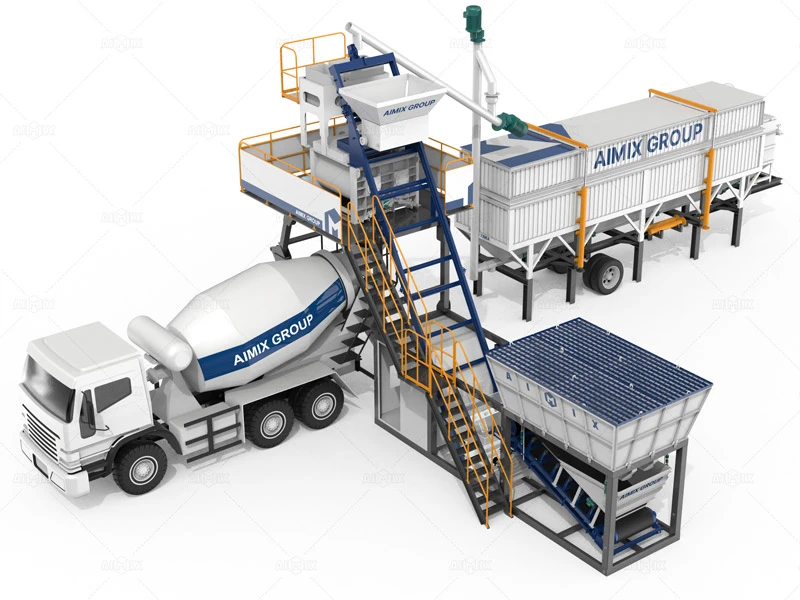
Foundation-free concrete batching plant
Foundation-free models only require compacted, flat hard ground instead of deep civil works. Installation cycles are much shorter. They fit medium municipal works, bridge sections and sites where foundation pouring is restricted. It balances stable output and moderate mobility for multi-phase fixed-site contracts.
Mobile concrete batching plant
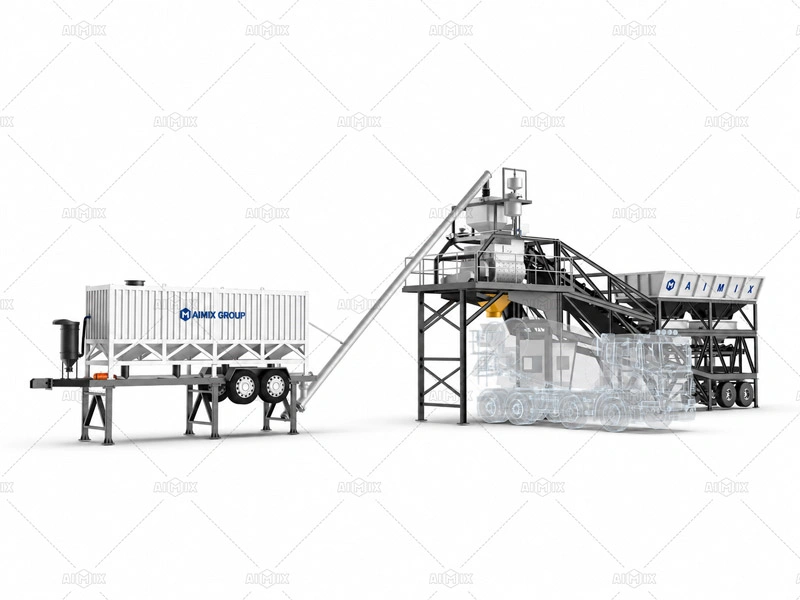
Mobile concrete plants integrate bins, mixer and control cabin on towable chassis. They move between job sites quickly after disassembly. Road rehabilitation, wind farm foundation and scattered rural projects are ideal matches. Output is usually medium, best for short-cycle temporary works.
Precast concrete batching plant
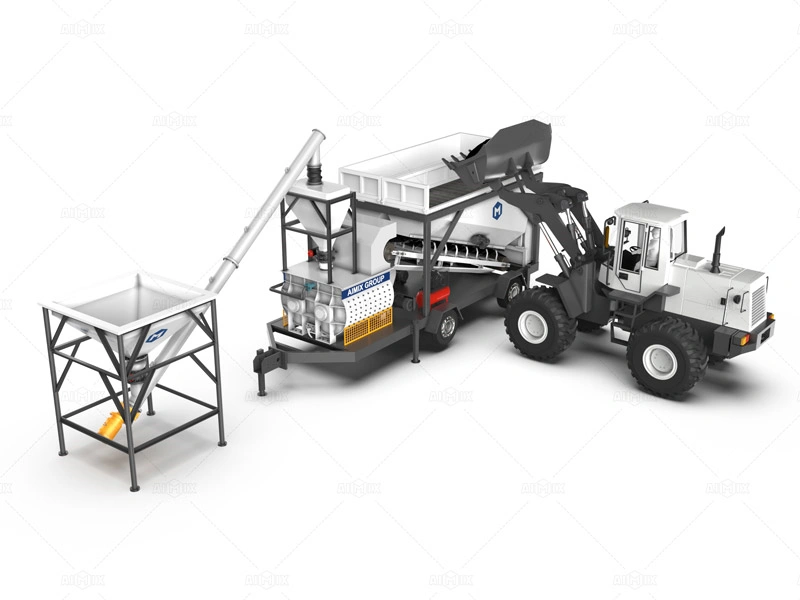
Precast plants are optimized for consistent low-slump concrete for prefabricated components such as beams, slabs and pipes. They feature precise weighing and stable batching cycles. They serve dedicated precast factories or on-site precast zones of large infrastructure projects.
Rapid-install concrete batching plant
Rapid-install plants adopt modular bolted frames without complex welding on site. Components are pre-assembled and tested in factory. Emergency projects, rush pipeline works and short-term remote jobs benefit most from its fast commissioning and straightforward disassembly. And AJQ70 batching plant is named fast-setup batching plant, because the establishment of the foundation will take too long, while it doesn’t need the foundation.
Dry mix concrete batching plant
Dry mix plants batch aggregate, sand and cement without central water mixing. Materials are loaded into transit mixers, where water is added and mixed during transport. They work well for roller compacted concrete, road base and projects with long haul distances to casting points.
Wet mix concrete batching plant
Wet mix plants complete full mixing of all raw materials including water inside the central mixer. Fresh concrete is discharged ready for placement. It guarantees uniform slump and strength, which is standard for commercial ready-mix, high-grade structural concrete and mass cast-in-place works. Learn more about this type: https://aimixgroup.com/concrete-batching-plant/wet-mix/.
Concrete Batching Plant Types Comparison
| Type | Foundation Requirement | Core Feature | Typical Output | Best Suitable Scenarios | Main Limitation |
|---|---|---|---|---|---|
| Stationary | Reinforced concrete foundation | High & stable capacity, strict quality control | High | Commercial ready-mix plant, large infrastructure, high-rise cluster, permanent precast yard | Expensive & slow to relocate |
| Foundation-free | Only compacted flat hard ground | Short installation, no deep civil work | Medium | Municipal projects, bridge sections, sites with foundation restriction | Not for frequent relocation |
| Mobile | No separate foundation (chassis integrated) | Towable chassis, fast disassembly & transfer | Medium | Road repair, wind farm foundation, scattered temporary jobs | Capacity limited |
| Precast | Custom foundation | Precise batching for low-slump concrete | Medium-High | Prefabricated beam/slab/pipe factory, on-site precast zone | Specialized, not flexible for general cast-in-place |
| Rapid-install | Simple ground support | Modular bolted structure, factory pre-tested | Medium | Emergency projects, rush pipeline, remote short-term jobs | Not designed for years of continuous heavy production |
| Dry mix | Standard or simplified foundation | No central water mixing; mixing happens in transit mixer | Medium-High | Roller compacted concrete, road base, long haul distance | Hard to control slump consistency |
| Wet mix | Standard foundation | Full central mixing with water, ready-to-place concrete | Medium-High | Commercial ready-mix, high-grade structural concrete, mass cast-in-place | Higher water & mixer maintenance |
Step-by-Step Selection Guide
Follow this priority checklist to narrow down your concrete batching plant:
-
Confirm project duration & relocation frequency
- Long-term fixed operation (≥2 years): Choose stationary for lowest unit production cost.
- Multi-phase fixed site but cannot do deep foundation: Pick foundation-free.
- Need to move to many different job sites frequently: Go for mobile.
- Urgent start-up, short-term remote task: rapid-install is preferred.
-
Check concrete application & mix design
- Normal structural concrete, commercial ready-mix: wet mix plant (default mainstream option).
- RCC, road base, long transport distance: dry mix plant.
- Prefabricated components (beam, slab, culvert pipe): precast dedicated batching plant.
-
Calculate required hourly output
Match plant theoretical output with your peak pouring demand, reserve 10%–20% surplus to avoid overtime overload.
-
Evaluate site condition
Check land bearing capacity, space, local civil permit rules. If foundation pouring is banned or costly, avoid stationary type.
-
Budget & later operation cost
Stationary has higher upfront civil cost but low running cost. Mobile / rapid-install save foundation cost while spending more on repeated transportation & hoisting.
-
Local compliance & after-sales
Verify environmental emission standard, noise limit, and spare parts availability in your region before purchase.
Quick Rule of Thumb:
Wet mix = most general projects;
Mobile = move often;
Foundation-free = stay on one site but skip foundation;
Dry mix = long haul / RCC road;
Precast = only for prefab parts.
No single plant fits every scenario. Compare your required hourly output, site access, relocation frequency and concrete specification before finalizing your investment.