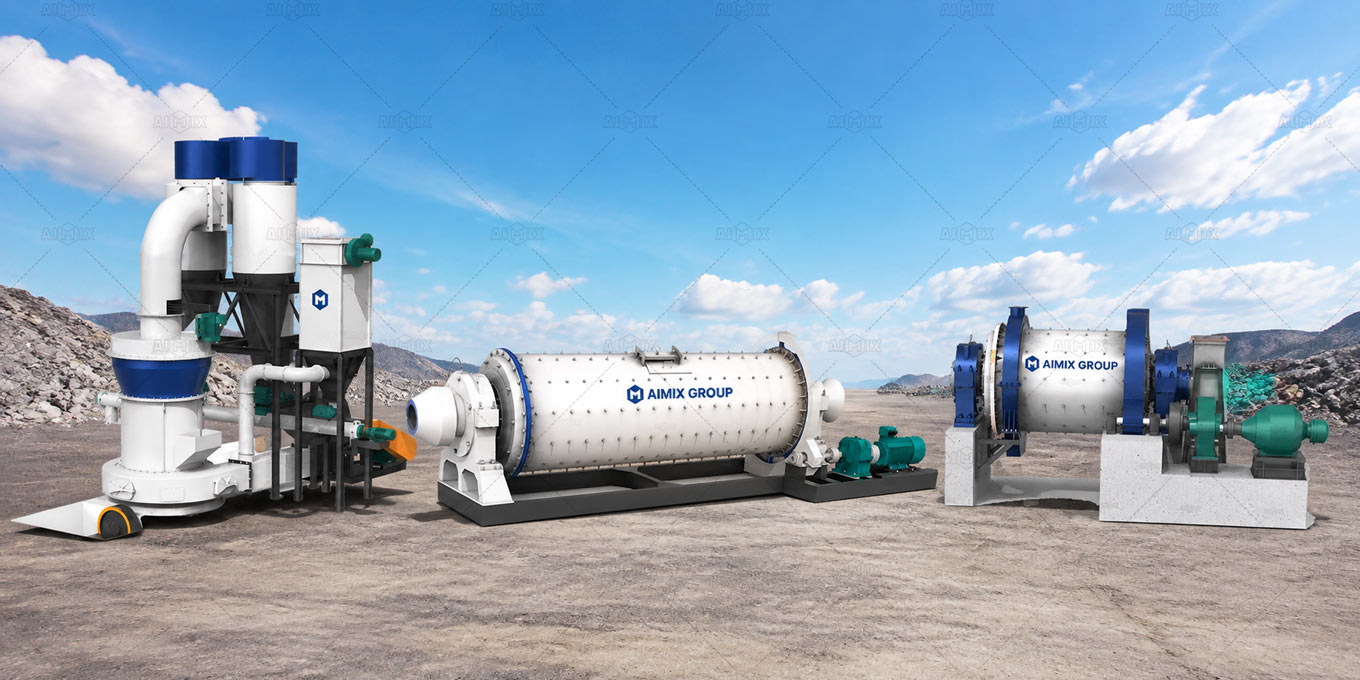
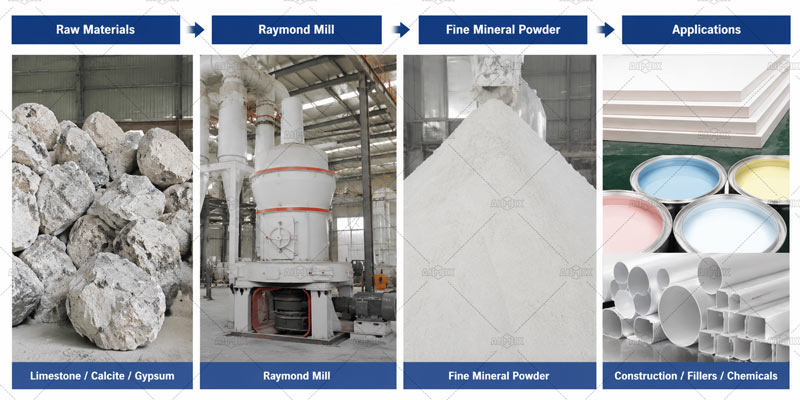
Mineral resources can generate significantly more commercial value after being processed into powders with specific particle sizes and performance characteristics. Instead of selling raw rock or simply crushed materials, businesses can use a grinding mill machine to produce limestone powder, gypsum powder, calcium carbonate, barite, and other industrial mineral products for construction, manufacturing, agriculture, and chemical applications. This creates opportunities to move from basic resource extraction toward higher-value mineral processing.
Why Grinding Creates New Business Opportunities
Raw minerals generally have limited commercial value when they are sold directly from a quarry or mine. Crushing can reduce large rocks into usable aggregate, but grinding takes material processing one step further by producing controlled powder products. The finer and more consistent material can serve a wider range of industrial applications.
For example, limestone can be processed into powder for construction materials, fillers, agriculture, and other industries. Barite powder can serve specialized industrial applications, while gypsum and other minerals can be processed according to specific particle-size requirements. The business opportunity comes from identifying a mineral resource with sufficient reserves and converting it into products that have stronger market demand.
This means a grinding business should not begin with equipment selection alone. Investors should first understand the available raw material, potential customers, required powder specifications, and achievable selling prices. Equipment should then be selected around these commercial requirements.
From Raw Rock to Marketable Mineral Powder
A commercial grinding operation often starts with size reduction before the material reaches the mill. Large pieces of rock are difficult to feed directly into most grinding systems, so stone crushing equipment is commonly used as an upstream processing stage.
A typical process may include feeding, primary crushing, secondary crushing, screening, grinding, classification, and finished-product collection. The crushing stage reduces the feed to a suitable size, while the grinding mill machine further reduces the particles to the required powder fineness.
This connection between crushing and grinding is important for overall plant efficiency. If the feed entering the mill is too large or inconsistent, grinding efficiency can decline and energy consumption can increase. Proper upstream preparation can therefore improve the stability of the entire mineral processing line.
Choosing the Right Grinding Mill Machine
Different minerals and applications require different grinding technologies. The appropriate grinding mill machine depends on factors such as material hardness, moisture content, abrasiveness, feed size, required fineness, production capacity, and final product specifications.
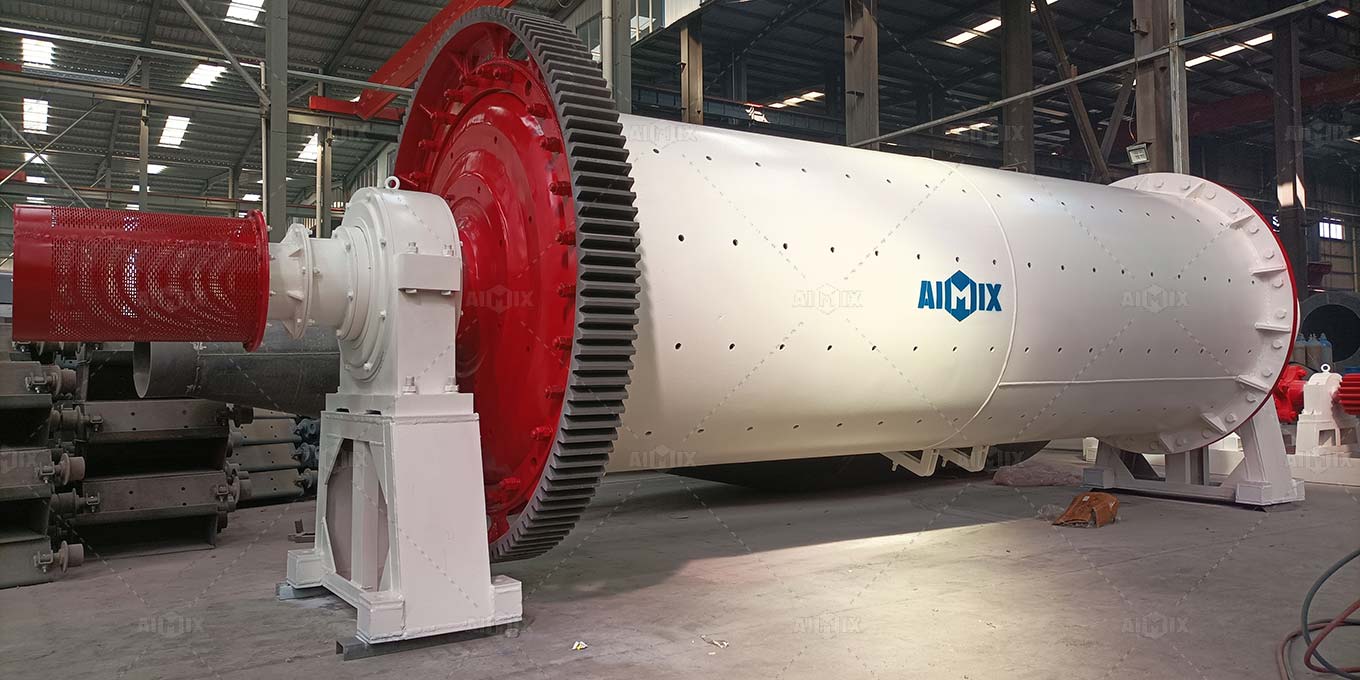
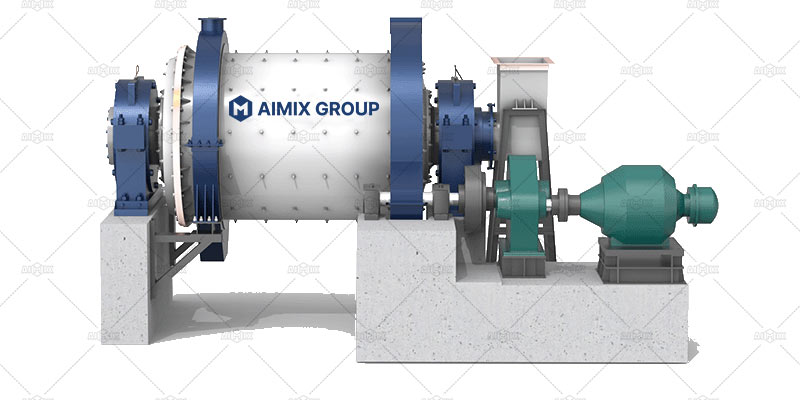
For certain applications, a ball mill machine can provide effective grinding and is widely associated with mineral processing operations. Other grinding technologies may be more appropriate when the objective is producing specific fine or ultrafine powders. The important point is that equipment selection should follow the material and product requirements rather than relying on a one-size-fits-all approach.
Investors should also evaluate the complete system around the mill. Feeders, classifiers, dust collection equipment, conveyors, storage systems, and packaging facilities can all influence production performance. A well-matched system can provide more consistent powder quality and reduce bottlenecks between different processing stages.
Identifying High-Value Powder Markets
The profitability of a grinding business depends heavily on the market for its finished products. A mineral may be abundant, but abundance alone does not guarantee a profitable processing operation. Investors need to identify applications where customers are willing to pay for specific grades, particle sizes, or purity levels.
Construction-related applications can provide a broad market for mineral powders. Limestone powder, for example, can be used in cement-related products, construction materials, and fillers. Other processed minerals may serve agriculture, ceramics, glass, paint, plastics, drilling, or chemical industries.
Market segmentation can create additional opportunities. Instead of producing one generic powder, a processing plant may produce several grades designed for different customers. However, additional classification and processing requirements can increase costs, so each product should be evaluated according to its expected market value and production cost.
Connecting Crushing Capacity with Grinding Demand
When building an integrated mineral processing plant, crushing capacity and grinding capacity should be balanced. Producing crushed material faster than the mill can process it can create large intermediate stockpiles, while an oversized grinding system may remain underutilized.
The relationship becomes particularly important when investors are planning a complete production line. The capacity of the stone crushing equipment should provide a stable feed for the grinding section without creating unnecessary investment in excess crushing capacity.
Material flow should also be considered. Efficient conveyors, appropriate storage areas, and controlled feeding can help maintain continuous production. The objective is to create a coordinated process in which crushing, grinding, classification, and packaging support the same production target.
Energy Consumption and Cost per Ton
Grinding is an energy-intensive stage of mineral processing, making energy consumption an important factor in business profitability. Investors should calculate expected electricity or fuel consumption and convert it into a realistic production cost per ton.
Grinding efficiency depends on material characteristics, feed size, grinding fineness, mill design, operating conditions, and classification efficiency. Producing extremely fine powder generally requires more energy and processing time than producing coarser material. Therefore, the target fineness should be determined by customer requirements rather than simply choosing the finest possible product.
Maintenance and wear costs should also be included in the calculation. Grinding components, liners, grinding media, classifier parts, and other wear components may require periodic replacement. Evaluating these costs alongside energy consumption provides a more accurate picture of the plant’s long-term economics.
Building a Business Model Around Mineral Processing
A successful grinding operation can follow several business models. A quarry owner may add grinding to an existing aggregate operation, allowing part of the extracted material to move into higher-value powder production. A mineral processor may instead purchase raw material from local mines and focus on processing and distribution.
Another approach is to establish the plant close to major industrial customers. This can reduce transportation costs for heavy mineral products and provide faster access to regional markets. The best location depends on the balance between raw material availability, electricity costs, labor, infrastructure, transportation, and customer concentration.
Packaging and storage should also be considered. Fine powders require appropriate handling systems to prevent contamination and excessive dust. Bulk storage, bags, silos, and automated packaging can be selected according to customer purchasing patterns.
Plan the Investment for Long-Term Growth
Investors should evaluate a grinding mill machine project based on total lifecycle economics rather than equipment purchase price alone. Initial capital expenditure, installation, infrastructure, energy consumption, maintenance, labor, raw material costs, transportation, and product selling prices all influence the return on investment.
Future expansion can also be incorporated into the original plant design. If demand for mineral powder is expected to increase, sufficient space can be reserved for additional grinding capacity, classifiers, storage systems, or packaging lines. This allows the business to expand without completely redesigning its original operation.
Ultimately, the strongest opportunity comes from creating a clear connection between resource availability and market demand. A reliable mineral deposit provides the raw material foundation, while efficient crushing and grinding technology transforms that resource into commercially valuable products.
Conclusion
A grinding mill machine can open new business opportunities by turning relatively low-value mineral resources into powders designed for specific industrial markets. The most promising projects combine suitable raw materials, reliable stone crushing equipment, an appropriately selected grinding system, efficient classification, controlled operating costs, and clearly defined customers. A ball mill machine may be suitable for certain mineral grinding applications, while other technologies can be considered according to material and fineness requirements. By treating crushing and grinding as part of a complete value-added processing strategy rather than isolated equipment purchases, investors can build a more flexible and commercially sustainable mineral powder business.