High-rise construction in the UAE introduces a concrete placement challenge that is fundamentally different from low-rise building work. As building height increases, concrete must travel farther vertically, while the construction team must maintain a steady supply at the required elevation and within the workable time of the mix. The problem is not simply pumping concrete to a greater height. Pressure requirements, pipeline arrangement, pumping distance, placing speed, concrete properties, site access, and equipment reliability all become increasingly consequential. A concrete placement plan that works for a three-story building may therefore be unsuitable for a high-rise tower.
For UAE contractors, the planning process must account for both the height of the structure and the rhythm of construction. High temperatures can further complicate concrete handling, while congested urban sites may restrict concrete pump equipment positioning. Selecting a suitable pumping system at the beginning can help create a more predictable concrete delivery chain, particularly when large vertical distances and continuous pours are involved.
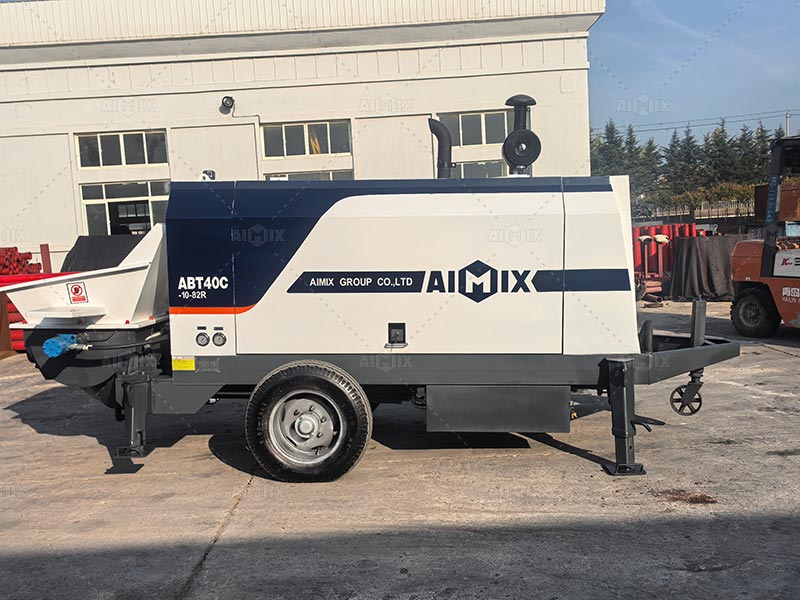
How Building Height Changes Concrete Pumping Requirements
Greater Vertical Distance Creates Higher Pumping Demands
As the building rises, the concrete has to travel through a longer pipeline before reaching the placing point. This increases the resistance within the delivery line and requires the pumping system to maintain sufficient pressure.
The relationship is not governed by height alone. Horizontal pipeline sections, bends, reducers, pipe diameter, concrete consistency, aggregate characteristics, and pumping rate also influence the pressure required.
A taller building therefore requires a more deliberate calculation of the complete pipeline arrangement rather than selecting a concrete pump in UAE according to vertical height alone.
Concrete Flow Must Remain Stable at the Placing Point
High-rise concrete placement is often organized around a carefully sequenced pour. If the pumping rate fluctuates excessively, workers may have difficulty maintaining the intended placement rhythm.
A stable flow is particularly important when concrete is being placed into slabs, columns, shear walls, or heavily reinforced structural elements. Interruptions can create cold-joint risks or force the crew to modify the planned pouring sequence.
Pipeline Layout Becomes Part of the Placement Plan
For tall buildings, the pipeline may need to pass through multiple floors or vertical risers before reaching the active work area. Every bend and connection can affect pressure loss and operational efficiency.
The pipeline should therefore be planned alongside the building’s structural and temporary works rather than treated as an afterthought.
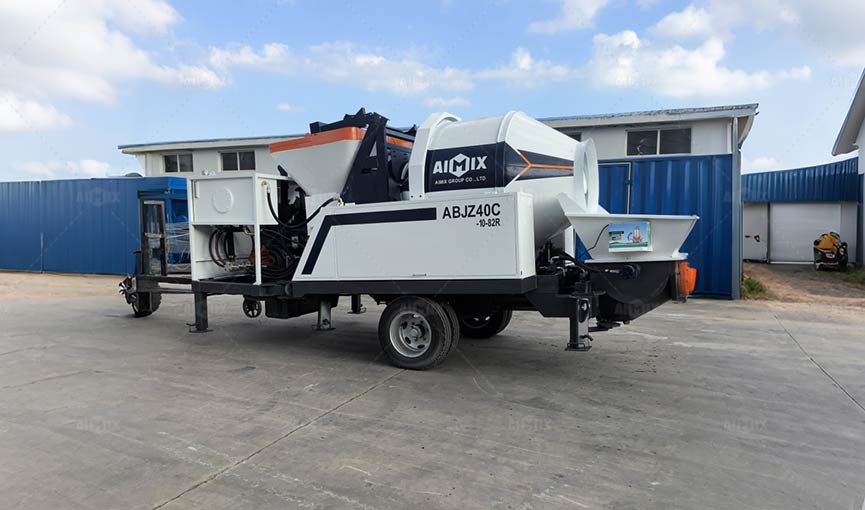
Choosing the Right Concrete Pumping Arrangement for UAE High-Rise Projects
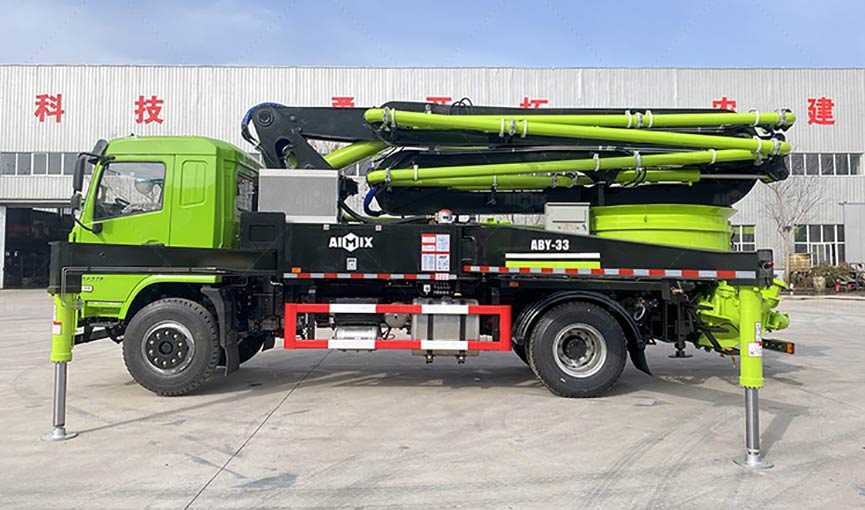
Concrete Boom Pumps Suit Accessible Placement Areas
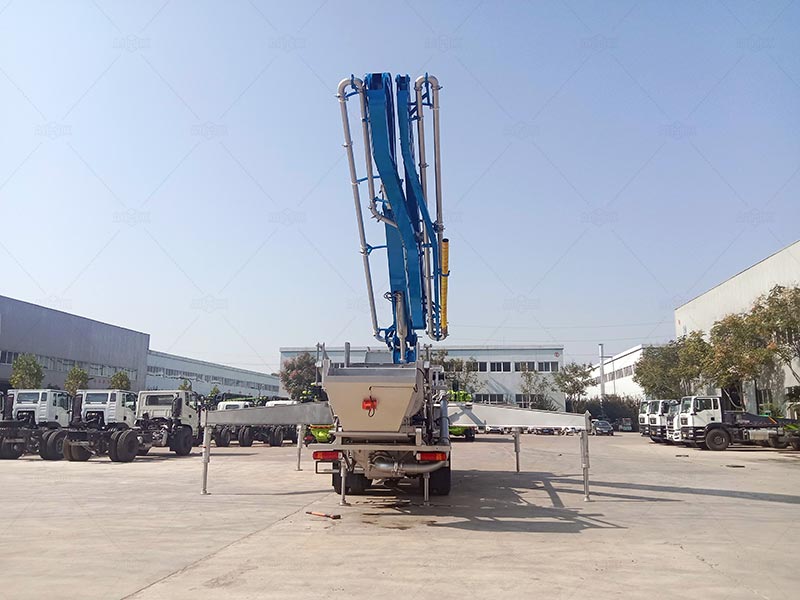
A concrete boom pump in UAE can be advantageous when the placing point can be reached effectively by a boom-mounted distribution system. The articulated boom provides flexibility around the construction area and can reduce the need for workers to manually reposition delivery hoses.
For suitable projects, this arrangement can accelerate concrete placement and improve control over where concrete is discharged.
However, building height, site geometry, boom reach, foundation conditions, and surrounding obstacles must all be checked before deployment.
Stationary Pumps Support Long-Distance Vertical Delivery
For high-rise construction, a stationary pump can provide a different solution. Instead of relying on a truck-mounted boom to reach the placing location, the pump can remain at a strategically selected position while concrete travels through a fixed pipeline.
Contractors evaluating a concrete stationary pump for sale in UAE should consider the required vertical height, horizontal pumping distance, concrete output, pressure requirements, pipeline diameter, and expected operating duration.
This configuration can be particularly useful when concrete must be delivered to upper floors repeatedly throughout a long construction period.
Stationary Pumping Is More Than a High-Pressure Requirement
A suitable stationary pump must be integrated with the complete concrete supply system. The batching plant, mixer trucks, pump, pipeline, placing equipment, and labor crew must operate at a compatible rhythm.
If the pump can theoretically deliver more concrete than the batching and transportation system can supply, its additional capacity provides little practical benefit.
Higher Buildings Require Better Pipeline Management
Vertical pipelines should be supported securely and inspected regularly. As the pumping height increases, pipeline vibration and pressure fluctuations become more significant considerations.
Proper connection of pipes, elbows, clamps, and reducers is essential. Wear should also be monitored because abrasive aggregate can gradually reduce pipeline wall thickness, particularly in high-use sections and bends.
How UAE Site Conditions Influence Concrete Placement Planning
High Temperatures Can Compress the Working Window
UAE construction projects frequently operate under hot climatic conditions. Elevated temperatures can accelerate moisture loss and influence the workability and setting behavior of fresh concrete.
This makes pumping and placing coordination particularly important. Concrete should arrive at the placing point within an appropriate timeframe, and the entire supply chain should be synchronized to avoid unnecessary waiting.
For high-rise work, the challenge becomes more pronounced because concrete has to travel through a long delivery system before reaching the final location.
Urban Sites Can Restrict Pump Positioning
High-rise projects in Dubai, Abu Dhabi, and other developed areas often operate within compact sites surrounded by existing structures, roads, utilities, and traffic.
Equipment positioning must therefore be planned carefully. A boom concrete pump in UAE construction may need to operate from a restricted area while maintaining safe access for mixer trucks.
Access and Pump Location Should Be Planned Together
The pump should be positioned where concrete delivery vehicles can approach efficiently without creating conflicts with cranes, workers, excavators, or other site traffic.
For stationary pumping systems, the location should also accommodate the pipeline route and provide adequate access for inspection and maintenance.
Concrete Mix Design Must Match the Pumping System
Pump selection cannot be separated from concrete characteristics. Aggregate size, grading, cementitious content, water-to-cement ratio, admixtures, and slump all affect pumpability.
A mix that performs well at the batching plant may require additional consideration when transported through a long vertical pipeline.
The objective is to maintain sufficient workability for continuous pumping without compromising the required structural properties of the concrete.
Planning Should Follow the Building’s Construction Sequence
Building height changes not only the technical requirements of concrete pumping but also the organization of the work.
As floors rise, the placing point moves upward. The pipeline arrangement, access routes, pumping schedule, and labor organization may therefore need periodic adjustment.
A well-designed plan anticipates these changes instead of reacting to them after construction reaches the upper floors.
For contractors considering a concrete pump in UAE, the correct selection should consequently be based on the entire placement system rather than pump capacity alone. Vertical height, pipeline configuration, concrete properties, required output, site restrictions, climatic conditions, and construction sequence all need to be considered together.
The higher the building, the less room there is for an improvised concrete delivery strategy. A suitable boom pump can provide flexible distribution where access allows, while a stationary pump can offer a dependable solution for sustained vertical and long-distance delivery. When pumping equipment, pipeline design, concrete mix, batching capacity, and site logistics are planned as one system, concrete placement becomes more predictable even as the structure climbs higher above the ground.