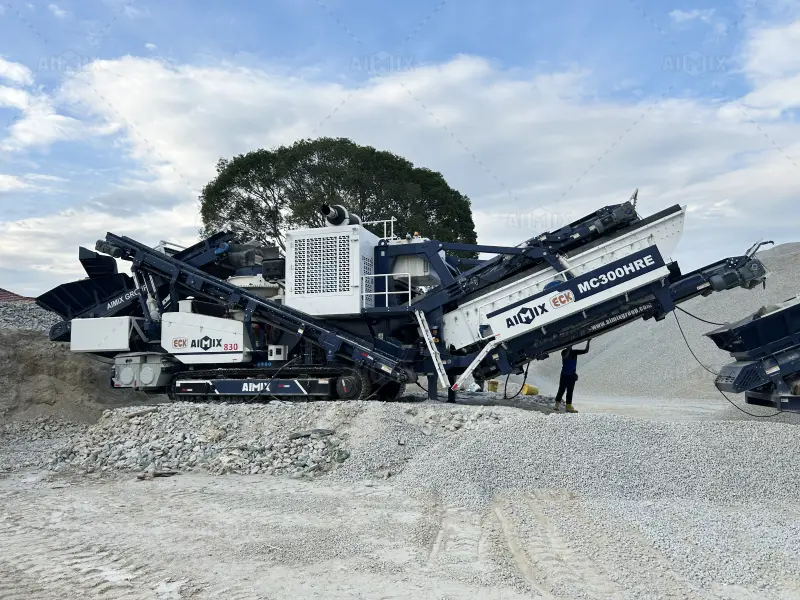
Efficient mobile crushing operations depend not only on equipment capacity but also on how materials move through the production site. In quarries, construction projects, and aggregate processing operations, poorly planned equipment positions can create unnecessary transportation, repeated material handling, conveyor interference, and production bottlenecks. Although mobile crushing equipment offers flexibility in relocation and configuration, placing machines wherever space is available does not necessarily create an efficient production layout. A better approach is to organize the site around the movement of raw materials, intermediate products, and finished aggregates. By prioritizing material flow, operators can reduce handling distances, improve equipment coordination, and make better use of available working space.
Why Material Flow Should Determine Equipment Layout
A crushing site typically involves several connected activities: raw material delivery, stockpiling, feeding, crushing, screening, and finished product storage. Each stage depends on the previous one, so delays or inefficient transportation in one area can affect the entire production process. For example, positioning a primary crusher too far from the raw material stockpile increases loader travel distances. Placing finished aggregate stockpiles near the feeding area can also create unnecessary traffic conflicts between loaders and delivery vehicles.
Planning around material flow means arranging equipment according to the sequence of production rather than treating each machine as an independent unit. Raw materials should move through the processing stages with as few unnecessary transfers as possible. Intermediate products should have clear routes to secondary crushing or screening, while finished aggregates need accessible storage and loading areas. This approach helps establish a more continuous production process and reduces avoidable handling costs.
Positioning Primary Crushing Equipment Near the Raw Material Supply
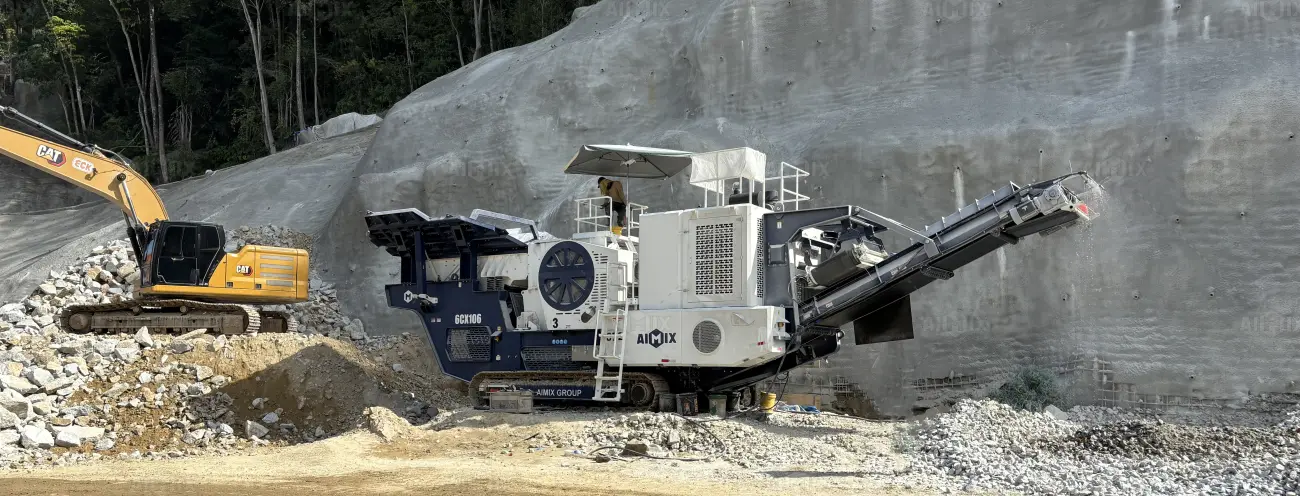
The primary crushing stage is usually the first major processing point, so its location should reflect where raw materials enter the production area. A mobile jaw crusher is commonly used for primary crushing because it can reduce large rocks into smaller particles for downstream processing. Positioning it near the raw material stockpile or excavation area can shorten loader travel distances and reduce the time required to feed the machine.
However, proximity to the material source should not be the only consideration. Operators must also account for ground stability, equipment access, working clearance, and the direction of material discharge. The crusher needs sufficient space for loading operations, maintenance access, and safe movement around the machine. Its discharge conveyor should face the next processing stage or an intermediate stockpile to avoid unnecessary material transfers.
When the raw material source changes as excavation progresses, the primary crusher may need to be relocated. A practical site layout should therefore leave suitable movement corridors and identify potential operating positions in advance. This allows equipment relocation without disrupting the entire production arrangement.
Coordinating Secondary Crushing and Screening Positions
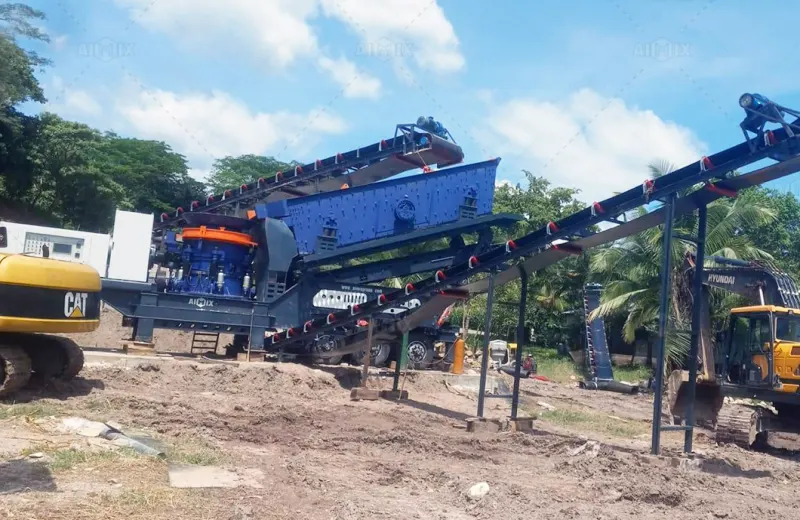
After primary crushing, material usually requires further size reduction, screening, or both, depending on the final aggregate specifications. A mobile cone crusher is often used for secondary or tertiary crushing of hard and abrasive rock. Its position should allow a stable feed supply from the primary crushing stage while maintaining an efficient discharge route to the screening equipment.
If the secondary crusher is placed too far from the primary unit, additional conveyors or loader movements may be required. Excessive transfer distances increase handling requirements and can create more opportunities for material spillage. On the other hand, placing machines too close together may restrict maintenance access, interfere with conveyor movement, and create safety problems. The layout should balance short material routes with adequate operating space.
Screening equipment also needs to be positioned according to product flow. Different aggregate fractions should have clear discharge routes to separate stockpiles. If oversize material returns to the crusher for further reduction, the return conveyor should be arranged to support continuous circulation without crossing pedestrian routes or interfering with incoming feed.
Adapting Equipment Position to Different Crushing Processes
Not every project requires the same crushing sequence. The layout should reflect the properties of the raw material, the required product shape, and the final particle-size distribution. For example, a mobile impact crusher may be selected for processing limestone, concrete waste, or other suitable materials where impact crushing can help achieve the required product characteristics.
In a configuration where impact crushing follows primary jaw crushing, the two machines should be positioned to maintain a direct and consistent material transfer route. If the impact crusher includes an integrated screening system, sufficient space should be reserved for the discharge of different product fractions and any return material. This is particularly important when producing several aggregate sizes for road construction or concrete applications.
For projects with changing material characteristics or multiple output requirements, operators may need to adjust the crushing sequence. Planning flexible equipment positions, conveyor routes, and stockpile areas makes it easier to modify the process without completely reorganizing the site.
Designing Stockpile and Transportation Areas Around Product Flow
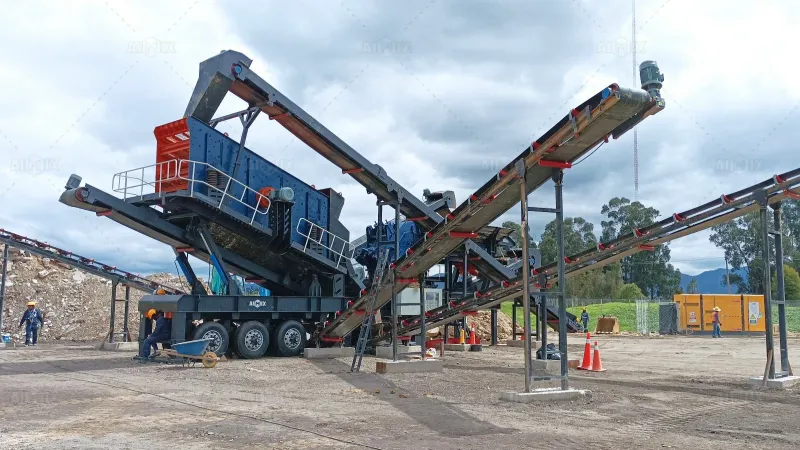
Finished aggregate stockpiles are an essential part of site layout because they connect production with loading and transportation. Their locations should correspond to the discharge points of the screening system and the movement routes of loaders and trucks. Separating different product sizes helps prevent cross-contamination and makes it easier to maintain consistent aggregate specifications.
Stockpile capacity should also match the production schedule and delivery frequency. If storage areas are too small, finished materials may accumulate around conveyor discharge points and interrupt production. If stockpiles are positioned too far from loading areas, additional loader travel increases handling time and fuel consumption. A well-planned arrangement balances storage capacity, accessibility, and efficient material movement.
Vehicle routes should be separated where possible. Raw material trucks, finished aggregate transport vehicles, loaders, and maintenance vehicles should not compete for the same narrow access paths. Clear traffic routes reduce congestion and improve operational safety, particularly at sites with limited working space.
Using Site Conditions to Refine the Layout
Ground conditions, site dimensions, elevation changes, drainage, and weather exposure all influence equipment positioning. On uneven terrain, operators should identify stable working platforms before deploying crushing equipment. Excessive slopes may affect machine stability, conveyor alignment, and material transfer. Where possible, natural ground elevation differences can be used to support material movement, provided that safe operating conditions are maintained.
Drainage should be planned around both equipment and stockpile locations. Poor drainage can create muddy access routes, unstable ground, and difficulties in loading or relocating machines. Dust control, noise management, maintenance access, and emergency routes should also be incorporated into the layout. These requirements are easier to address during initial planning than after the production line has been installed.
Evaluating Layout Efficiency Through Production Data
Once the plant begins operating, production data can reveal whether the site layout supports efficient material movement. Useful indicators include loader travel time, conveyor utilization, material transfer distances, equipment waiting time, stockpile turnover, and total processed tonnage. Frequent crusher stoppages caused by insufficient feed may indicate poor coordination between stockpiles and loading operations. Repeated conveyor blockages or excessive material accumulation may point to problems with transfer points or equipment positioning.
Operators should review these indicators regularly and make adjustments when production conditions change. Moving a stockpile, changing a conveyor discharge direction, or relocating one machine may improve the overall workflow without requiring additional crushing equipment. The objective is to reduce unnecessary movement while maintaining stable feeding, safe access, and consistent product quality.
Building a More Efficient Mobile Crushing Site Layout
Effective mobile crushing site planning starts with understanding where materials come from, how they move through each processing stage, and where finished products need to go. Positioning crushers, screens, conveyors, and stockpiles around these material routes can reduce unnecessary handling, improve equipment coordination, and increase production efficiency. Rather than arranging machines simply according to available space, operators should design the layout around the complete material flow. This approach makes mobile crushing operations more adaptable to changing project conditions while supporting safer and more economical aggregate production.