Producing road base material is not simply about crushing large rocks into smaller pieces. Road construction requires aggregates with a controlled particle-size distribution, good compaction performance, and consistent quality across every production batch. For contractors and quarry operators, producing 0–40 mm road base material means controlling both the crushing process and the screening system.
So, what is the best crushing plant solution for producing road base material with a controlled 0–40 mm gradation? In most applications, a combination of primary jaw crushing, secondary crushing, and multi-deck vibrating screening provides a practical solution. However, the exact configuration depends on the raw material, required production capacity, rock hardness, and local road construction specifications.
Whether you supply aggregate for highway projects, provincial roads, rural access roads, or industrial road construction, the right crushing plant can help maintain consistent product quality while controlling operating costs. Below, we explain how to design a suitable crushing and screening process for 0–40 mm road base production.
Why Does Road Base Material Need A Controlled 0–40 Mm Gradation?
Before selecting crushing equipment, it is important to understand why particle-size distribution matters in road construction. Road base material forms an important structural layer between the subbase and the pavement surface. Its quality affects load distribution, compaction, drainage, and long-term road performance.
Particle Size Affects Compaction And Stability
A 0–40 mm aggregate mixture contains different particle sizes, from fine material to larger crushed stones. When the gradation is properly controlled, smaller particles can fill the spaces between larger particles. This helps create a denser aggregate structure during compaction.
However, an unsuitable particle distribution can create construction problems. Too many large particles may make compaction difficult. Excessive fines can increase moisture sensitivity and affect drainage. Therefore, contractors need more than a crusher that produces material below 40 mm. They need a complete system that controls the proportion of different size fractions.
Different Road Projects Have Different Gradation Requirements
Not every road project uses exactly the same aggregate specification. Highway base courses, provincial roads, mining access roads, and industrial roads may follow different technical requirements.
For example, some projects require a maximum aggregate size of 40 mm, while others specify particular percentages passing each sieve size. The required grading curve may also depend on the local road authority or project engineering specification.
Therefore, customers should confirm the applicable specification before purchasing a crushing plant. A nominal 0–40 mm product does not automatically meet every road base standard.
What Is The Best Crushing Plant Configuration For 0–40 Mm Road Base?
For many hard-rock road base applications, a two-stage crushing plant with a properly designed screening system is a practical starting point. However, a third crushing stage may become necessary when the raw material is difficult to process or the project requires a more controlled product distribution.
The main objective is to reduce large rocks efficiently and separate the material into suitable size fractions without unnecessary recirculation. For projects with different rock types, feed sizes, and output requirements, a customized crushing plant solution helps match the equipment configuration with actual production conditions.
Stage 1: Primary Jaw Crusher For Large Raw Materials
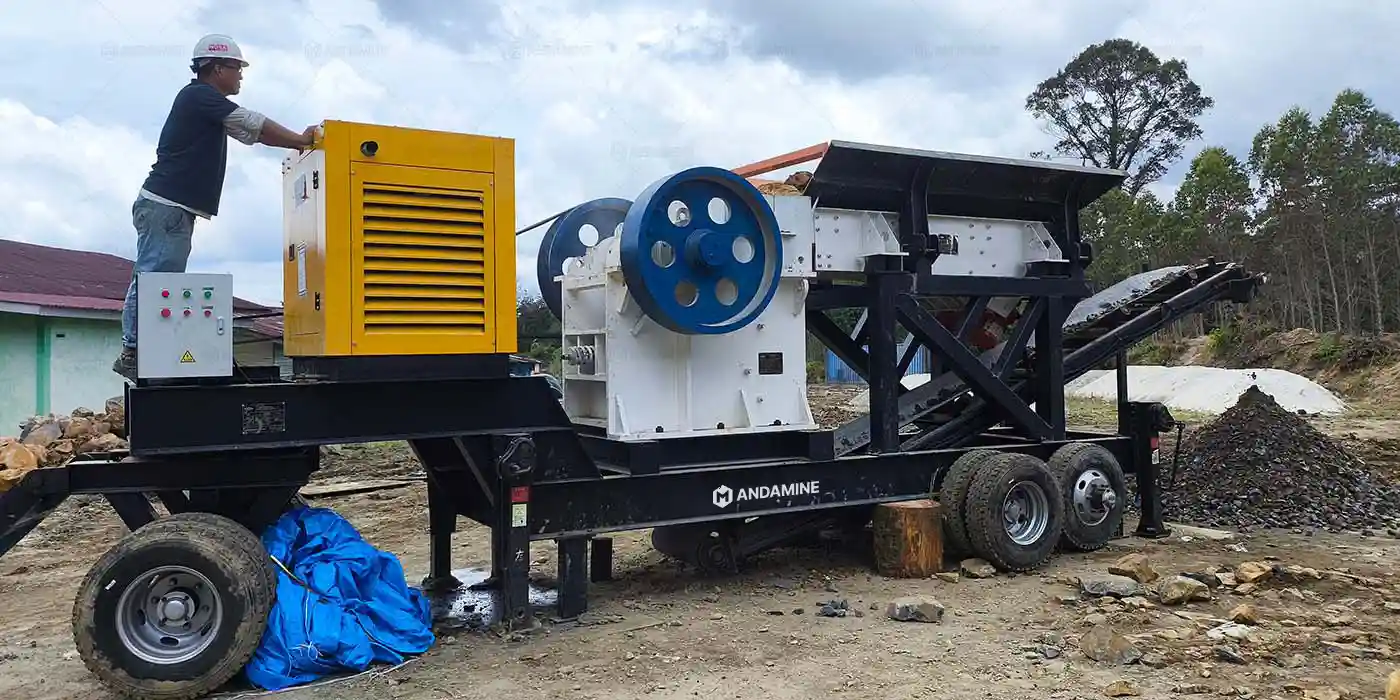
A jaw crusher is commonly used as the primary crusher in aggregate production. It handles large feed rocks and reduces them into smaller pieces for downstream processing.
For quarry operations processing limestone, granite, basalt, or andesite, the jaw crusher selection should consider the maximum feed size, material hardness, compressive strength, and required capacity. Customers evaluating a jaw crusher for sale should check the feed opening and actual hard-rock processing capacity rather than comparing model names alone.
A vibrating feeder controls the material entering the crusher. This helps maintain a stable feed rate and reduces sudden loading fluctuations. In addition, a suitable feeder design can separate naturally occurring undersized material before primary crushing.
For road base production, the primary crusher does not need to produce the final 0–40 mm material. Its main responsibility is to prepare a consistent feed for the secondary crushing stage.
Stage 2: Secondary Crushing For Better Size Reduction
After primary crushing, the material moves to the secondary crusher. This stage reduces the rock further and prepares it for final screening.
A cone crusher is often suitable for hard and abrasive materials such as granite, basalt, and andesite. Its compression-based crushing process can support stable production in many hard-rock applications.
An impact crusher is another option, particularly when particle shape is important. It uses impact force to break the material and can produce more cubical particles in suitable applications. However, operators should evaluate wear-part consumption when processing highly abrasive rock.
Consequently, the choice between a cone crusher and an impact crusher should depend on material characteristics, product requirements, and operating costs rather than purchase price alone.
Stage 3: Tertiary Crushing When More Gradation Control Is Needed
Some projects can achieve the required road base grading through primary crushing, secondary crushing, and screening. Others may need an additional crushing stage.
A tertiary cone crusher or suitable fine crusher can reduce oversize material further. This is useful when the secondary stage cannot consistently produce the required particle distribution or when the project needs additional control over smaller aggregate fractions.
However, adding another crusher does not automatically improve the final product. More equipment also increases investment, energy consumption, maintenance requirements, and wear-part costs. Therefore, a material test and crushing-flow calculation should determine whether tertiary crushing is necessary.
How Does The Screening System Control 0–40 Mm Gradation?
Crushing equipment reduces material size, but vibrating screens control the final particle distribution. For this reason, screening is just as important as crusher selection in road base production.
Use Multi-Deck Vibrating Screens To Separate Aggregate Sizes
A multi-deck vibrating screen can divide crushed material into several size fractions. The screen openings should match the target grading and the characteristics of the raw material.
For example, a screening system may separate the output into the following fractions:
- 0–5 mm: Fine aggregate that helps fill voids between larger particles.
- 5–10 mm: Small aggregate used in blending the final road base mixture.
- 10–20 mm: Medium-sized aggregate that contributes to the material structure.
- 20–40 mm: Coarser aggregate used in the upper part of the target size range.
- Above 40 mm: Oversized material that requires further crushing or recirculation.
These fractions are illustrative production categories, not a universal road base grading specification. The actual screen arrangement and product blending ratios should follow the project’s sieve analysis and technical requirements.
Why Is Closed-Circuit Crushing Important?
A closed-circuit crushing process sends oversized material from the vibrating screen back to the crusher. This prevents particles larger than 40 mm from entering the finished road base stockpile.
For example, when the screen identifies material above 40 mm, a return conveyor can transfer it to the secondary crusher for further reduction. Meanwhile, material that meets the required size range moves to the appropriate stockpile or blending system.
This arrangement helps control oversize and reduces unnecessary handling. More importantly, it allows the operator to adjust the crushing process according to actual screening results.
Should You Produce 0–40 Mm Road Base In One Product Or Separate Fractions?
This is an important decision for quarry owners and road construction material suppliers. Both production methods have advantages, but they serve different operational needs.
Direct 0–40 Mm Production
In a simpler production arrangement, the plant screens and collects material within the 0–40 mm range as one finished product.
This approach can suit projects with stable raw material and relatively straightforward grading requirements. It also simplifies stockpile management and material handling.
However, a single finished stream offers less flexibility when customers require different grading curves. Changes in feed characteristics can also affect the final product distribution.
Separate Size Fractions And Controlled Blending
For projects with stricter grading requirements, producing separate aggregate fractions can provide better control. The plant can stockpile different sizes and blend them according to the required grading curve.
For example, an operator can adjust the proportion of 0–5 mm, 5–10 mm, 10–20 mm, and 20–40 mm material to meet the project’s specification.
This method requires additional stockpile space, material handling, and potentially a controlled blending system. Nevertheless, it offers greater flexibility when supplying multiple road projects or customers with different specifications.
For commercial aggregate producers, this flexibility can also create more opportunities to sell individual aggregate sizes rather than relying on a single mixed product.
How Much Crushing Plant Capacity Do You Need For Road Base Production?
Production capacity should match the project’s daily material demand, working hours, and construction schedule. Selecting a plant that is too small may delay road construction. On the other hand, excessive capacity can increase equipment investment and operating expenses.
Calculate Capacity Based On Daily Road Construction Demand
Suppose a road contractor needs 1,200 tons of road base material per day and operates the crushing plant for 10 effective hours. The required finished-product output is:
1,200 tons ÷ 10 hours = 120 TPH.
This means the project needs approximately 120 tons of saleable road base material per hour.
However, the raw-feed capacity may need to exceed 120 TPH. Oversize recirculation, material losses, screening efficiency, equipment downtime, and product rejection can all affect the final output.
Therefore, the supplier should calculate the complete plant capacity rather than simply recommending a crusher with a nominal 120 TPH rating.
Match Plant Capacity With Project Duration
Project duration also influences equipment selection. A contractor completing a short road construction contract may prioritize a mobile or modular crushing plant that can move between sites.
In contrast, a quarry supplying road base material to several construction projects may benefit from a stationary plant with higher continuous production capacity.
As a result, buyers should consider annual production demand, expected working days, transportation costs, and future contracts before selecting the plant configuration.
Mobile Or Stationary Crushing Plant: Which Is Better For Road Base Production?
Once the crushing process and capacity are clear, the next decision concerns plant mobility. Both mobile and stationary crushing plants can produce road base material, but their advantages differ according to project conditions.
Mobile Crushing Plant For Multiple Construction Sites
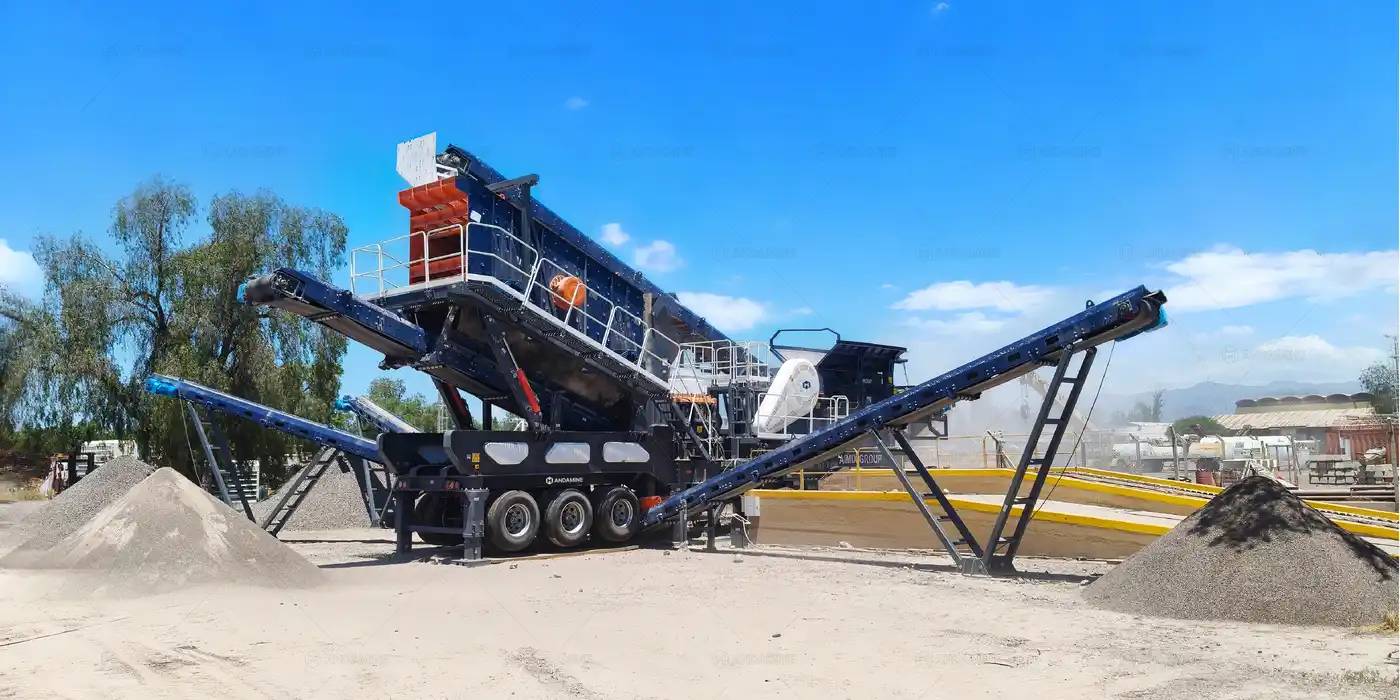
A mobile crushing plant is suitable for contractors who work on different road construction projects or process material close to the construction site.
Its main advantages include:
- Flexible Relocation: Operators can move the equipment between suitable working locations.
- Reduced Material Transportation: Processing rock closer to the construction site can reduce the need to transport unprocessed material over long distances.
- Modular Configuration: Some mobile systems combine feeding, crushing, screening, and conveying functions.
- Project Flexibility: Contractors can use the equipment for different road projects when the material and site conditions permit.
However, buyers should check the actual mobility, transport dimensions, site access, and setup requirements. Mobile equipment does not eliminate the need for suitable ground conditions, power or fuel arrangements, and maintenance space.
Stationary Crushing Plant For Long-Term Quarry Production
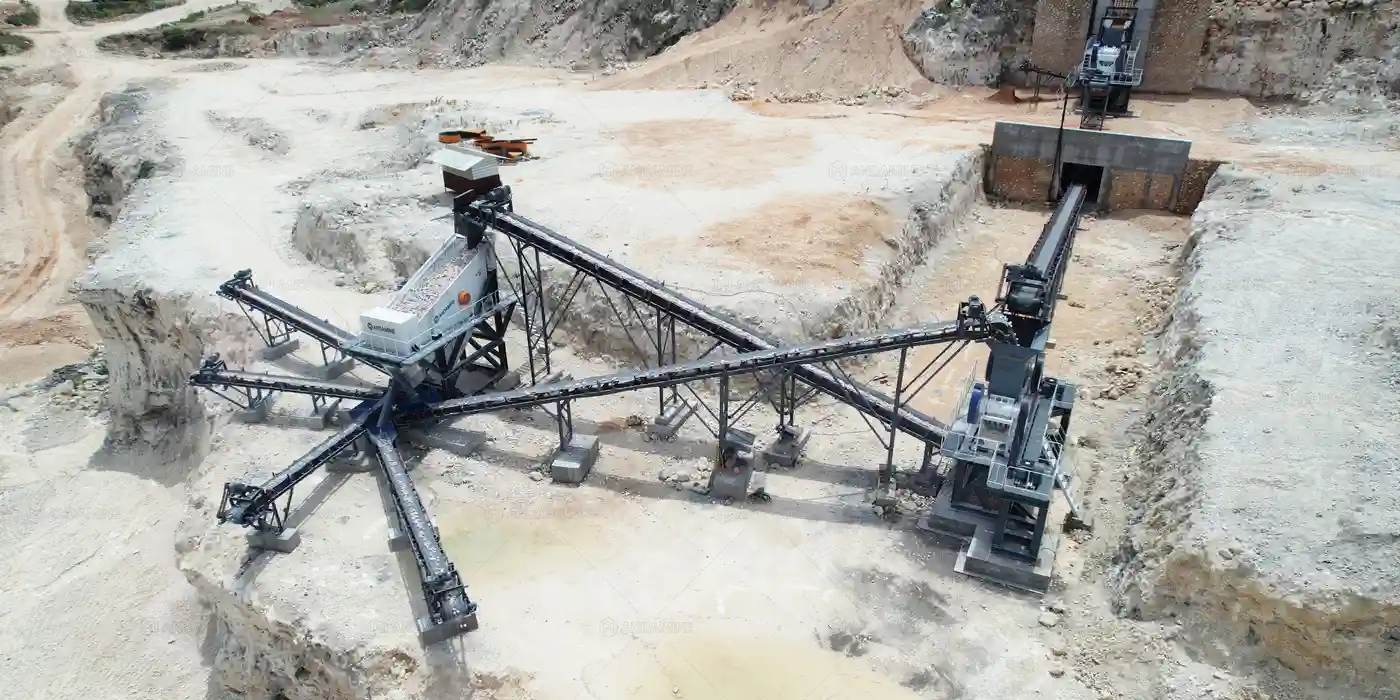
A stationary crushing plant is generally suitable for long-term quarry operations and commercial aggregate production. A properly designed stone crush plant can integrate multiple crushing stages, vibrating screens, and conveyors into a coordinated production line.
Its advantages include:
- Stable Production Layout: Fixed equipment foundations and conveyor arrangements support continuous material handling.
- Scalable Capacity: Operators can design the plant around long-term production targets.
- Multiple Product Options: Additional screens and stockpiles can support different aggregate sizes.
- Long-Term Operation: A permanent installation can suit quarries with consistent raw material reserves and ongoing demand.
Nevertheless, stationary plants usually require more site preparation and installation work. Contractors should compare these initial requirements with the expected operating period and relocation needs.
What Factors Affect The Operating Cost Of A Road Base Crushing Plant?
The purchase price represents only part of the total investment. For quarry operators and contractors, long-term operating costs determine whether the plant can remain commercially competitive.
Rock Hardness And Wear-Part Consumption
Hard and abrasive materials can increase wear on jaw plates, cone liners, impact components, and screen media. Therefore, operators should estimate wear-part consumption based on the actual rock characteristics and expected production volume.
For example, crushing granite or basalt may require a different maintenance budget from processing softer limestone. A supplier should explain the recommended wear materials and replacement intervals for the specific application.
Electricity Or Diesel Consumption
Energy consumption depends on the crusher configuration, motor power, material hardness, feed size, and operating load. Mobile plants may use diesel power or other available power arrangements, while stationary plants often use electric motors.
Instead of comparing motor power alone, customers should request estimated energy consumption per ton of finished road base material. This provides a more useful basis for evaluating operating costs.
Screening Efficiency And Material Handling
Poor screening efficiency can increase unnecessary recirculation and reduce finished-product output. Similarly, an unsuitable conveyor layout can create material bottlenecks and additional handling costs.
Therefore, an efficient plant should coordinate the feeder, crushers, vibrating screens, return conveyors, and stockpiles. This integrated design helps improve production stability and reduce avoidable operating expenses.
What Should Contractors Check Before Buying A Road Base Crushing Plant?
Before requesting a quotation, buyers should prepare the project information that directly affects equipment selection. This helps suppliers recommend a configuration that matches actual site conditions rather than relying on general capacity estimates.
Consider the following questions:
- What Is The Raw Material? Is it limestone, granite, basalt, andesite, river stone, or another rock type?
- What Is The Maximum Feed Size? Will the plant receive 300 mm, 500 mm, 600 mm, or larger raw rocks?
- What Is The Required Capacity? Do you need 50 TPH, 100 TPH, 150 TPH, 200 TPH, or more?
- What Is The Target Gradation? Does the project require a maximum size of 40 mm or a specific grading curve?
- Do You Need Separate Aggregate Fractions? Will you sell a mixed 0–40 mm product or several individual sizes?
- What Are The Site Conditions? Is the plant located in a permanent quarry or a temporary road construction area?
- How Long Will The Plant Operate? Is this a short-term contract or a long-term commercial aggregate business?
- What Are The Applicable Standards? Which road authority or project specification defines the required grading and material quality?
These details help determine the number of crushing stages, crusher models, screen decks, conveyor capacities, and whether a mobile or stationary configuration makes more commercial sense. Customers can also review available crusher plant for sale options and compare configurations according to their production requirements.
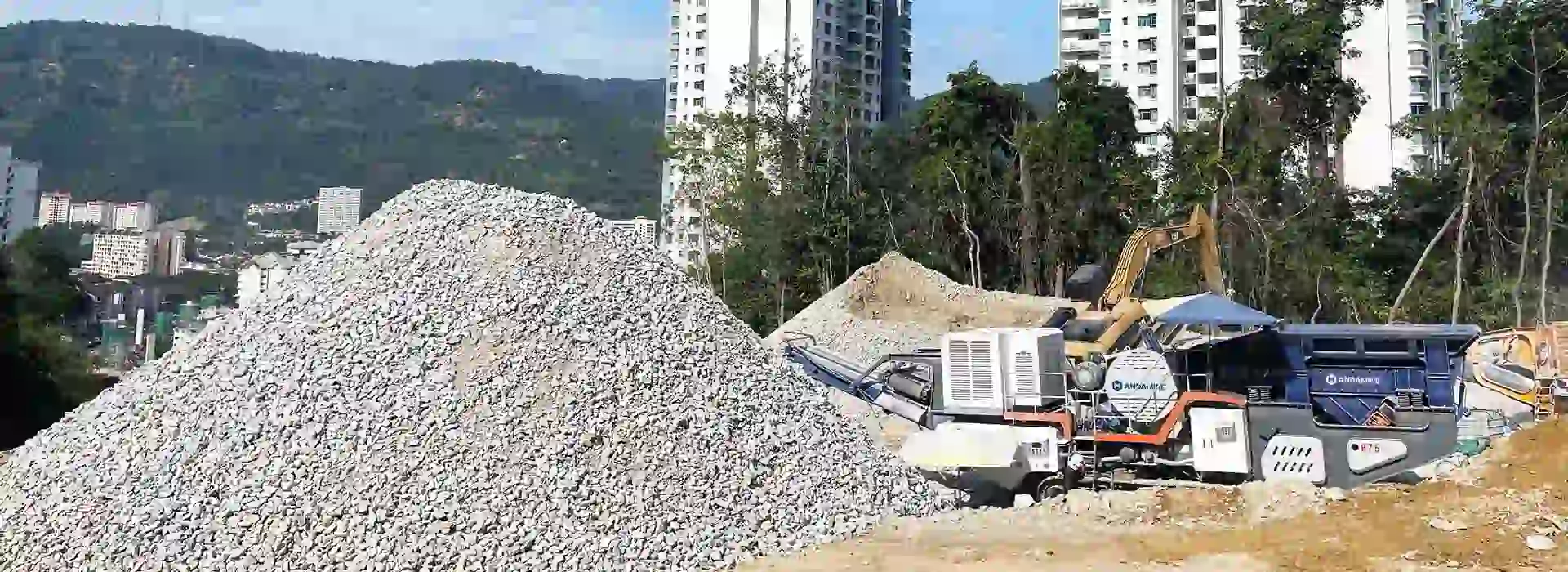
Build A Reliable Road Base Crushing Plant With AIMIX
The best crushing plant for producing road base material with a controlled 0–40 mm gradation is not necessarily the plant with the most crushers or the highest rated capacity. It is the system that matches the raw material, required grading curve, production target, and project operating conditions.
For many applications, a primary jaw crusher, secondary cone or impact crusher, and multi-deck vibrating screen provide a practical production solution. A closed-circuit return system helps control oversize, while separate stockpiles and controlled blending can improve grading flexibility when the project requires tighter specifications.