Fresh concrete must move through several coordinated stages before it reaches the paving point. The process starts with controlled batching, continues through mixing and transport, and ends with steady delivery to the paving equipment. Each transition matters because concrete begins to change as soon as water and cement come together. Delays, inconsistent supply, or poor transfer arrangements can affect workability and paving continuity. Understanding this material flow helps contractors design a concrete production and delivery chain that matches paving speed, haul distance, site access, and required placement quality.
A well-organized system therefore treats concrete production and paving as one connected workflow rather than two independent operations. The production equipment determines how much concrete can be prepared, while the transport and feeding arrangement determines whether that volume can actually reach the paving line at the required rhythm. This relationship becomes particularly important on highways, airport pavements, industrial yards, and other projects where continuous placement can extend over long working sections.
Concrete Production Starts With Controlled Batching
The first stage is proportioning the raw materials according to the specified concrete mix. Cement, aggregates, water, and admixtures must be measured consistently before mixing. A concrete batching plant for sale performs this work through dedicated weighing and feeding systems, creating a controlled starting point for the paving operation.
Material Proportioning Determines Concrete Consistency
Aggregate bins supply different sizes of stone and sand, while cement and water are introduced according to the selected mix design. Accurate weighing is important because changes in aggregate moisture, cement content, or water addition can influence workability and strength.
For paving projects, consistency is especially significant. The concrete paver receives successive batches over a long working section, so substantial variation between batches can interfere with the paving process. Stable batching provides a more predictable material stream.
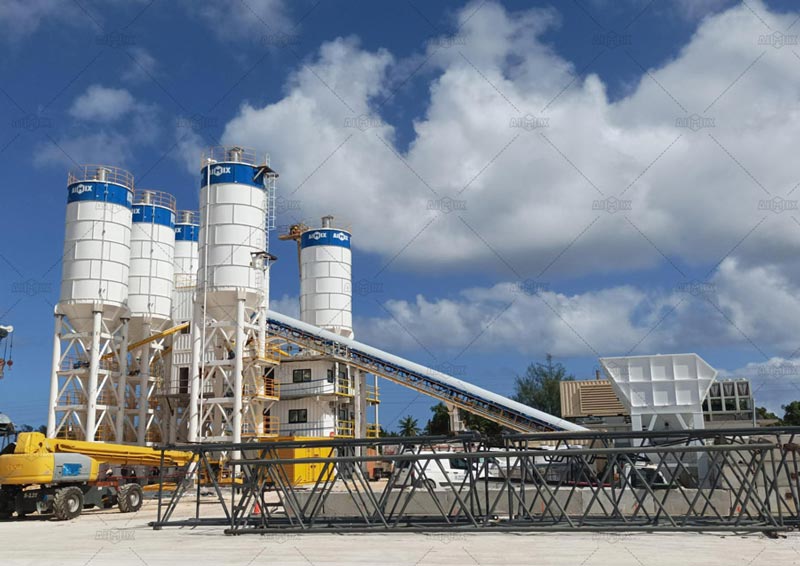
Mixing Converts Measured Materials Into a Paving-Ready Material
After weighing, the ingredients enter the mixer. Mixing distributes cement paste throughout the aggregate skeleton and produces a relatively uniform fresh concrete mixture.
The required mixing time depends on the mixer configuration and concrete formulation. Once mixing is complete, the concrete is discharged into the transport system. From this point onward, time becomes an operational variable because fresh concrete must remain workable until it reaches the paving equipment.
Transport Connects Concrete Production With the Paving Line
The distance between the production point and the paving location determines how concrete should be transported. A short haul may allow direct truck delivery, while a long linear project can require a more carefully coordinated fleet and discharge arrangement.
Mobile Production Can Follow a Moving Construction Front
For road and pavement projects that advance over considerable distances, a mobile concrete batching plant can reduce the separation between production and placement. The plant can be relocated as the construction front changes, allowing the concrete production point to remain closer to the active paving section.
This arrangement can simplify material logistics. Shorter travel distances may make delivery cycles easier to coordinate, particularly where the paving operation requires a continuous sequence of loads rather than sporadic concrete delivery.
Transport Capacity Must Match Paving Consumption
The paving machine consumes concrete at a specific rate. Transport equipment must therefore provide enough delivery capacity to prevent interruptions without creating excessive waiting time.
If trucks arrive too slowly, the paving operation may experience gaps in material supply. If too many trucks arrive simultaneously, vehicles can queue around the discharge area. The practical objective is a synchronized cycle: batching, loading, hauling, discharge, return, and reloading should work as a continuous loop.
Haul Distance Changes the Required Number of Transport Units
As haul distance increases, each truck spends more time away from the batching point. Maintaining the same concrete supply rate may therefore require additional transport units or a different production location.
The calculation should consider loading time, travel time, discharge time, return travel, and site traffic. These seemingly small intervals accumulate quickly on large paving projects.
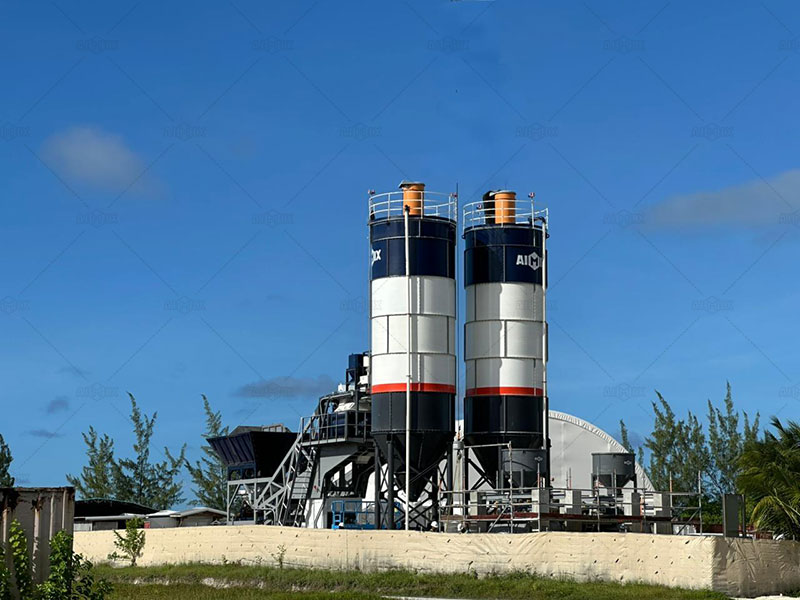
Portable Production Can Support Remote Paving Sections
Some paving projects move through areas where a permanent production facility would be inconvenient. Long highways, airport extensions, rural access roads, and large industrial sites can create a different logistical pattern.
A portable concrete batching plant can be positioned closer to the active construction zone and moved when project conditions change. Its value is not simply mobility. The important point is the relationship between plant location and the daily concrete delivery cycle.
Production Location Influences Delivery Rhythm
When the batching point is close to the paving section, transport cycles become shorter. This can make it easier to maintain a regular sequence of deliveries and reduce the amount of time vehicles spend traveling without carrying concrete.
However, plant positioning still requires practical planning. Aggregate storage, access roads, drainage, power supply, traffic circulation, and future relocation requirements should all be considered before installation.
Concrete Supply Should Follow the Paving Sequence
A paving project rarely consumes concrete in an entirely random pattern. Work is normally organized into lanes, sections, slabs, or continuous pavement runs. The concrete supply plan should follow this sequence.
The production team needs to know when paving starts, the expected placement rate, the length of the active section, and the likely interruption points. With these inputs, production and transport capacity can be coordinated around actual paving demand instead of relying solely on the nominal capacity of individual machines.
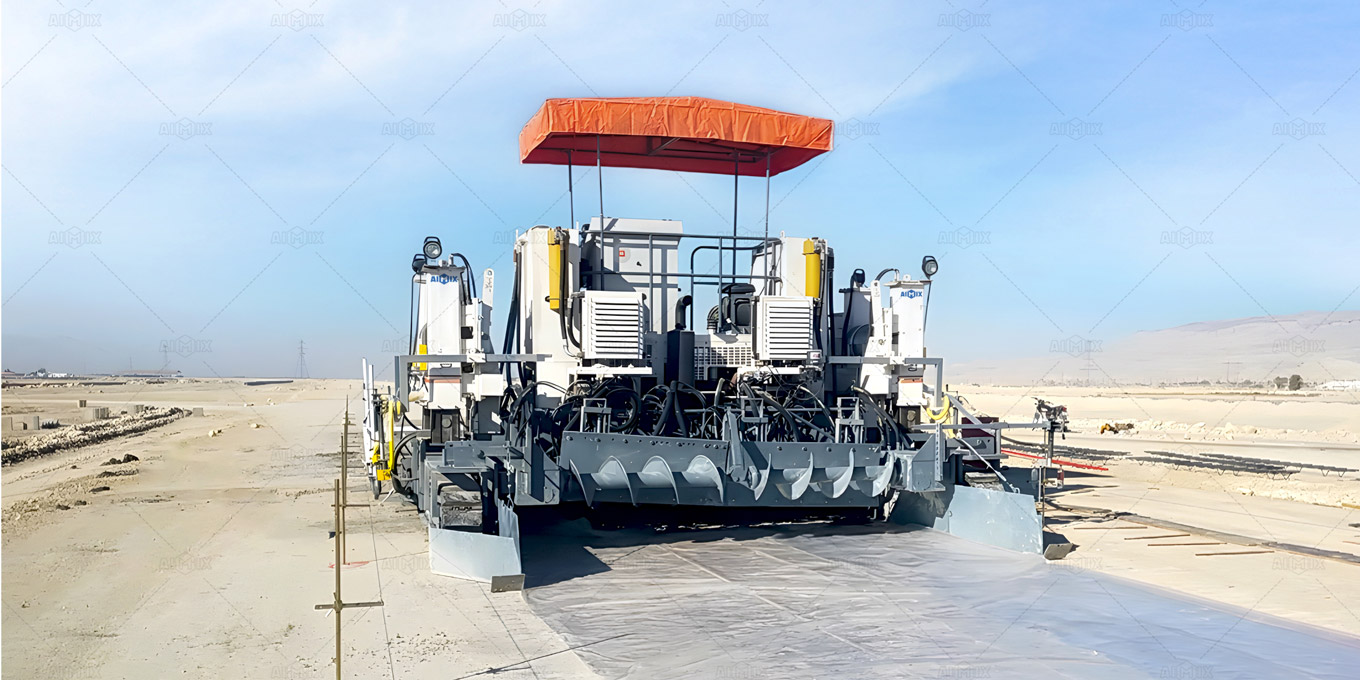
Feeding the Concrete Paver Requires Continuous Coordination
Once fresh concrete reaches the construction area, it must be transferred into the paving system without disrupting the placement sequence. Depending on the project configuration, concrete may be discharged directly from transport vehicles or transferred through an intermediate arrangement before entering the concrete paving machine.
The concrete paver machine then spreads, levels, and consolidates the fresh concrete according to the required pavement profile. Its operation depends on a sufficiently regular material supply.
Steady Feeding Supports Uniform Paving
A paving machine moving along a prepared section needs a dependable stream of concrete. Large gaps can force the machine to slow down or stop, while sudden surges can complicate material distribution.
This is why production capacity alone does not define project performance. The batching plant, transport fleet, discharge arrangement, and concrete paver must function as a single production chain.
Coordination Becomes More Important on Long Pavement Runs
For extended highway or airport paving, even a small mismatch between production and placement rates can accumulate over many hours. A slightly slower transport cycle can gradually create a material shortage, while excessive production can increase waiting and handling time.
A practical control system therefore monitors actual output, truck turnaround, concrete arrival intervals, and paving speed. Adjustments can then be made before a minor imbalance becomes a construction interruption.
Building a Complete Concrete-to-Paving Workflow
The complete process can be viewed as a sequence:
Raw materials → batching → mixing → transport → discharge → paver feeding → paving and consolidation.
Each stage has its own function, but none operates independently. The batching system establishes material consistency. Transport determines how reliably concrete reaches the work zone. The paving equipment determines how continuously the material can be placed.
For this reason, equipment selection should begin with the paving requirement and work backward toward production capacity, transport cycles, and plant location. A concrete supply system designed around the actual paving rhythm can reduce unnecessary interruptions and create a more coherent workflow from material storage to finished pavement.