For an 800 m³/day project, the right capacity depends on more than the daily target. You also need to consider actual production hours, peak pouring periods, truck cycle time, site distance, concrete mix changes, and operating time lost to loading, cleaning, and maintenance. Therefore, a concrete batching plant with around 100 m³/h is often a practical starting point, while 120–150 m³/h may make more sense when the project has concentrated pouring periods or limited working hours.
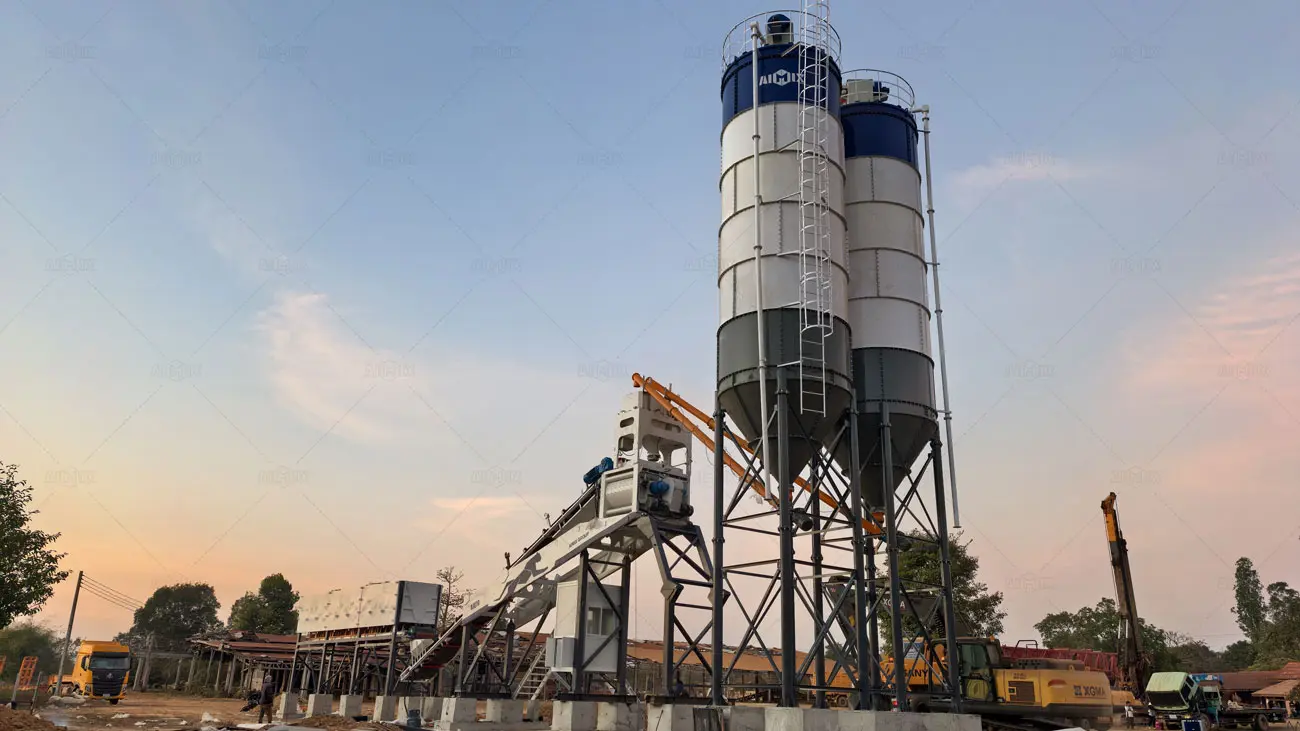
Start With the 800 m³ Daily Concrete Target
The first step is to convert the daily concrete requirement into an hourly production target. The basic calculation is straightforward:
Required hourly output = Daily concrete volume ÷ Effective production hours
For example, if a project needs 800 m³ of concrete and the plant operates for 10 effective hours:
800 m³ ÷ 10 hours = 80 m³/h
At first glance, an 80 m³/h plant appears sufficient. However, 80 m³/h is only the mathematical requirement. A construction site rarely runs at 100% efficiency for every minute of the day.
For this reason, buyers should separate the theoretical capacity from the usable project capacity. This distinction can have a major impact on whether the plant comfortably reaches 800 m³/day.
How Many Hours Will the Plant Actually Produce?
The number of working hours changes the required plant capacity significantly. More available production time can reduce the required hourly output, while a short pouring window increases it.
| Effective Production Time | Required Average Output for 800 m³ | Practical Plant Capacity to Consider |
|---|---|---|
| 6 hours/day | 133 m³/h | 150 m³/h or above |
| 8 hours/day | 100 m³/h | 120–150 m³/h |
| 10 hours/day | 80 m³/h | 100 m³/h |
| 12 hours/day | 67 m³/h | 80–100 m³/h |
These figures show why there is no single capacity that fits every 800 m³/day project. For example, a contractor with a long production window may comfortably use a 100 m³/h plant. In contrast, a contractor who must complete most of the concrete placement in an eight-hour shift may need additional capacity.
Moreover, the effective production time should not simply equal the total time the plant is switched on. Aggregate loading, material changes, truck positioning, mix adjustments, cleaning, and minor stoppages all consume time.
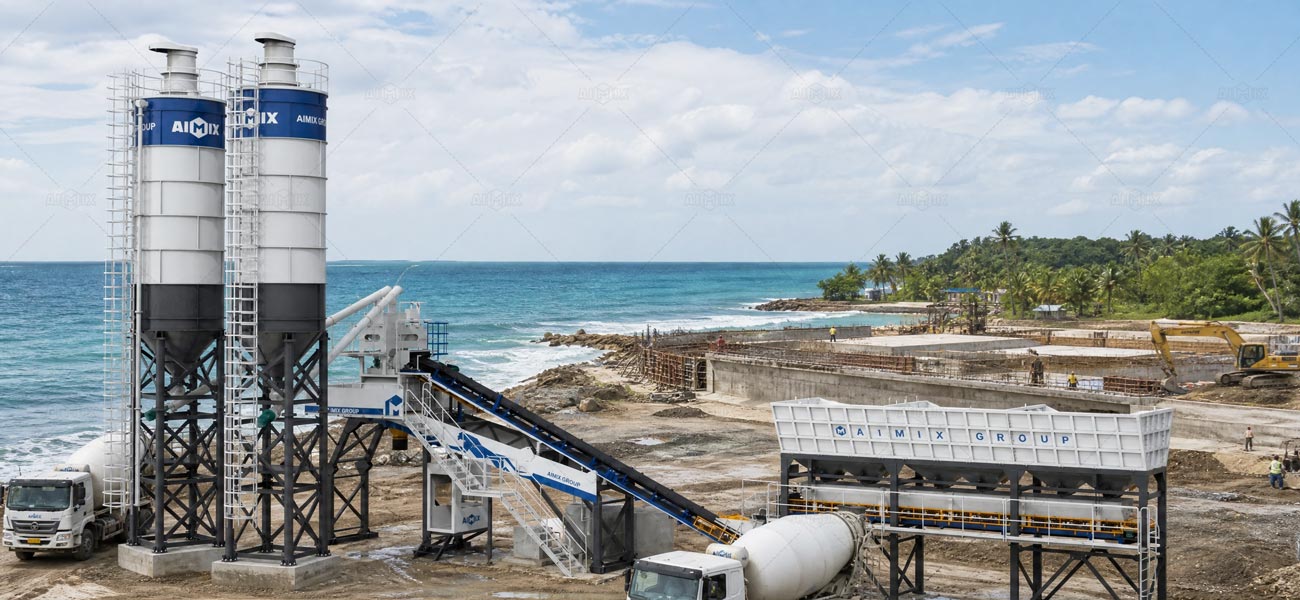
Why an 80 m³/h Plant May Not Be Enough
An 80 m³/h plant can theoretically produce 800 m³ in 10 hours. But that calculation assumes continuous production at its rated output.
Consider a more realistic situation. If the plant achieves an average usable output of 70 m³/h because of normal site interruptions, 10 hours of operation would produce:
70 m³/h × 10 hours = 700 m³/day
The project would then have a 100 m³ shortfall.
This is why contractors often choose some capacity above the mathematical minimum. The additional capacity is not simply about producing more concrete. It creates room to recover lost production time and respond to peak demand.
When Should You Consider a 100 m³/h Batching Plant?
For many projects targeting 800 m³/day, a 100 m³/h batching plant provides a useful balance between required output and operating flexibility.
At its nominal rate, the calculation is:
100 m³/h × 8 hours = 800 m³
This means the plant can theoretically match the entire daily requirement within an eight-hour production window. If the project operates for 9–10 hours, the additional production time provides more room for normal interruptions.
However, the plant capacity should still match the actual concrete delivery system. A 100 m³/h plant does not automatically mean the project can place 100 m³ of concrete every hour. Mixer trucks, pumping equipment, site access, and pouring speed must also keep pace.
Example: 800 m³/day With a 100 m³/h Plant
Suppose the project operates the batching plant for 10 hours and achieves an average usable output of 80–90 m³/h.
At 80 m³/h:
80 × 10 = 800 m³/day
At 90 m³/h:
90 × 10 = 900 m³/day
The second scenario gives the contractor some production margin. Therefore, the 100 m³/h class can be suitable when the project has a relatively stable daily demand and enough production hours.
When Does a 120–150 m³/h Plant Make More Sense?
A higher-capacity plant becomes more relevant when 800 m³ is not evenly distributed throughout the day.
For example, a large slab, foundation, bridge deck, or infrastructure pour may require hundreds of cubic meters within a limited time. In this case, the daily average does not tell the whole story.
Consider an 800 m³ pour that must be completed during an eight-hour working window:
800 ÷ 8 = 100 m³/h average demand
If trucks arrive late or the concrete pump stops for a short period, the plant needs additional production capacity to recover the lost time. A 120 or 150 m³/h plant can provide more operational headroom.
Therefore, contractors should ask not only, “How much concrete do I need per day?” but also, “How much concrete do I need during my busiest hour?”
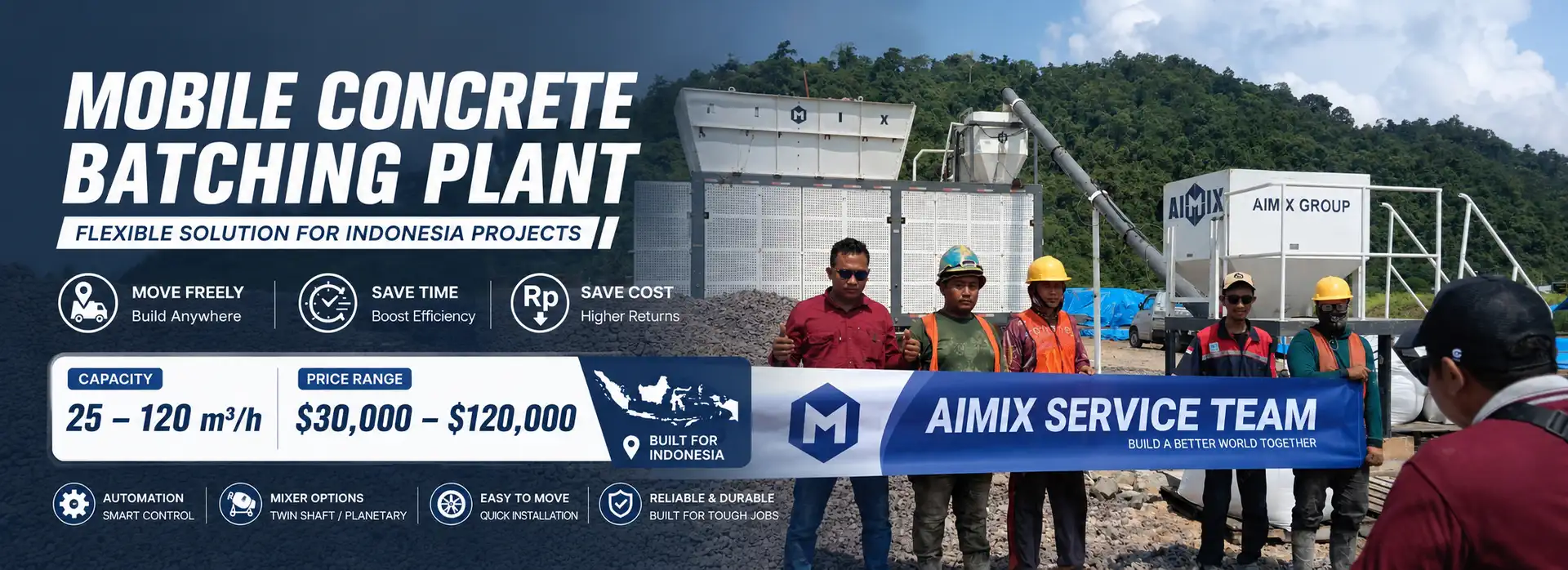
Do Mixer Trucks and Pumps Match the Batching Plant?
Plant capacity is only one part of the concrete supply chain. If the batching plant produces concrete faster than trucks can transport it, the plant may spend time waiting.
The same problem can happen at the other end. If the concrete pump cannot accept concrete at the required rate, increasing batching capacity will not necessarily increase actual placement output.
For example, a high-capacity batching plant with too few mixer trucks may not achieve its rated production in actual site conditions. Conversely, sufficient trucks and pumping capacity can help a properly sized plant maintain a much steadier workflow.
Check the Complete Concrete Delivery Chain
- Batching plant: Can it maintain the required hourly output?
- Mixer trucks: Are enough trucks available for continuous delivery?
- Transport distance: How long does one complete truck cycle take?
- Concrete pump: Can the pump handle the required placement rate?
- Site access: Can trucks enter, queue, discharge, and leave without delays?
- Aggregate supply: Can loaders and stockpiles support continuous production?
- Water and cement supply: Can materials keep up with the plant?
So, capacity should always be considered as part of a complete concrete production and delivery system rather than as an isolated machine specification.
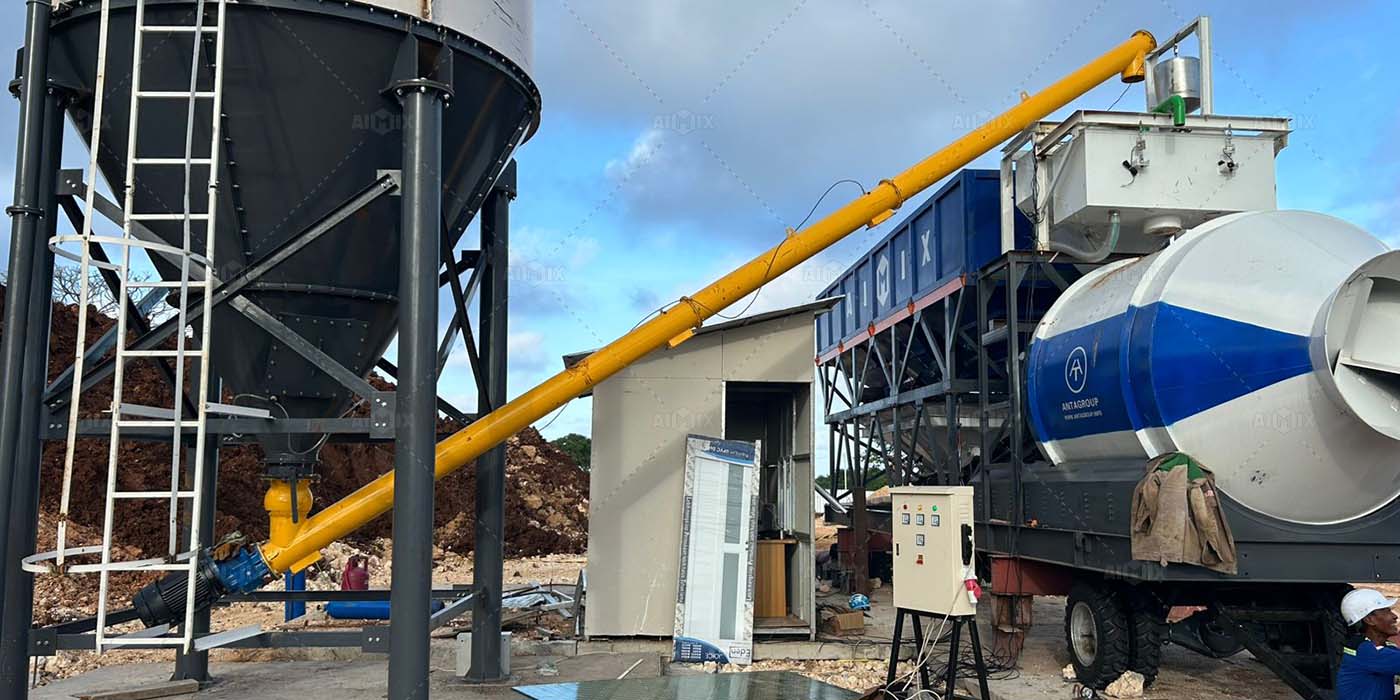
What Batching Plant Capacity Is Suitable for Different 800 m³/day Projects?
The project type can help narrow down the choice. A steady daily production schedule is different from a project with short, intensive concrete pours. For ready-mix producers, for example, the requirements may also change when one plant serves several construction sites.
In this situation, an rmc batching plant should be evaluated according to both daily production and delivery scheduling.
| Project Situation | Typical Capacity to Evaluate | Main Reason |
|---|---|---|
| 10–12 hours of steady production | 80–100 m³/h | Longer production window |
| 8-hour working shift | 100–120 m³/h | Higher hourly demand |
| Large continuous pours | 120–150 m³/h | More peak-production margin |
| Multiple projects supplied from one plant | 120–150 m³/h or higher | Demand can overlap |
These are planning ranges rather than fixed rules. The final selection should consider the actual project schedule, concrete mix requirements, transportation conditions, and equipment combination.
Should I Choose a Larger Plant Just for More Capacity?
Not necessarily. A larger plant can provide more production capacity, but capacity should follow the project requirement.
If your project consistently needs only 500–600 m³/day, buying a much larger plant may leave part of its capacity unused. On the other hand, choosing a plant too close to the theoretical minimum can create production pressure when demand increases.
Therefore, the better approach is to calculate three numbers before making a decision:
- Daily concrete demand.
- Required peak hourly output.
- Effective production hours available each day.
Then, check whether the trucks, pumps, aggregate handling system, and site logistics can support the selected capacity.
A Practical Starting Point for 800 m³ of Concrete Per Day
If your target is around 800 m³/day, the calculation can start with a simple benchmark:
800 m³/day ÷ 10 hours = 80 m³/h
From there, a 100 m³/h batching plant can provide a practical capacity range for many projects. If you have only eight effective production hours, frequent peak pours, or several concrete placement teams working at the same time, moving toward 120–150 m³/h can provide more operating margin.
Most importantly, do not size the plant from daily volume alone. The right capacity should connect production, transport, pumping, and placement into one workable concrete supply system.
Need Help Sizing the Concrete Plant?
If your project requires 800 m³ of concrete per day, start with your actual construction schedule rather than choosing a capacity from a catalog. Share your daily volume, expected working hours, peak pouring volume, project location, concrete delivery distance, and preferred pumping method.
Based on these factors, we can help evaluate whether a 100 m³/h, 120 m³/h, 150 m³/h, or another batching plant capacity better matches your project. The goal is not simply to choose a bigger plant. It is to build a concrete production system that can keep your project supplied when the pour is running at full speed.