In modern highway and elevated bridge construction, the use of precast concrete beams—such as box girders, T-beams, and I-beams—has become standard practice. Compared to traditional cast-in-place methods, precasting offers significant advantages: it drastically shortens construction schedules, ensures higher structural concrete quality, and reduces traffic disruption at project sites. However, as bridge spans and load capacity requirements increase, these precast elements have grown exceptionally large and heavy. Individual beams often weigh anywhere from tens to over a hundred tons, with lengths frequently spanning twenty to forty meters or more.
Handling such massive concrete components – from demolding and repositioning inside the casting yard to storing and loading them onto transport trucks – places immense demands on lifting equipment. Traditional crawler cranes, truck cranes, or rail-mounted gantry cranes often present limitations, such as restricted mobility, high infrastructure setup costs, or substantial space footprints when managing complex site layouts and frequent beam movements. In this context, Rubber Tyred Gantry (RTG) cranes have emerged as a versatile and effective material handling solution in modern precast yards and highway construction projects.
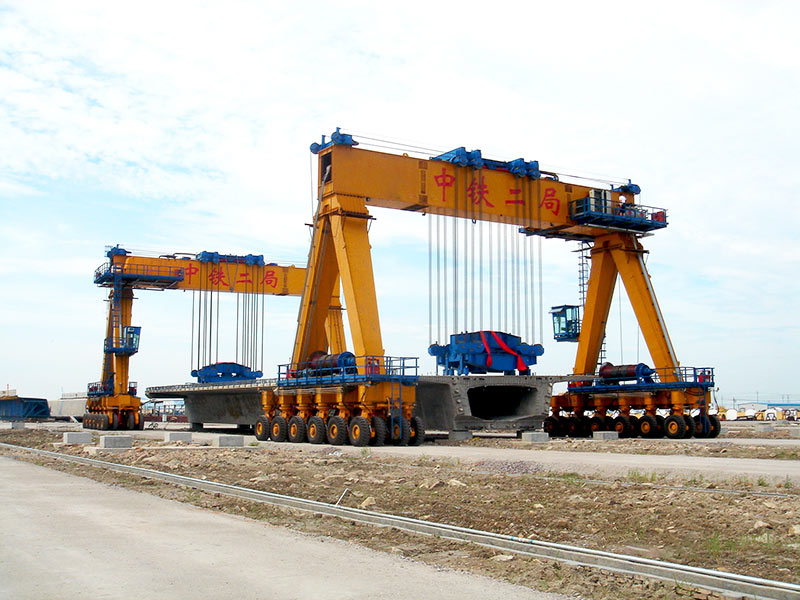
What is a Rubber Tyred Gantry (RTG) Crane?
Simply put, an RTG is a gantry crane mounted on heavy-duty rubber tires instead of steel wheels running on fixed tracks. Powered by diesel generators, cable reels, or onboard battery systems, an RTG can move freely across properly prepared, compacted ground surfaces.
An RTG blends the heavy lifting capacity and structural stability of a traditional gantry crane with the mobility of rubber-tyred equipment. Most modern RTGs feature versatile steering modes – including straight travel, crab steering, diagonal movement, and 360-degree zero-radius turning. This adaptability allows them to navigate tight passages and complex yard layouts with ease.
How RTGs Enhance Precast Beam Handling
1. Freedom from Fixed Rails for Maximum Operational Flexibility
Within a precast beam yard, girders must be moved repeatedly between casting beds, curing zones, storage areas, and dispatch platforms. Rail mounted gantry cranes require expensive civil engineering works to lay down reinforced concrete foundations and steel tracks, limiting the crane’s movement strictly to the rail lines.
RTGs eliminate this boundary. Operating on rubber tires, an RTG can travel across any designated area with adequate ground bearing capacity. If a storage zone fills up, the RTG can simply drive over to an auxiliary yard section. Furthermore, once a project phase finishes, the crane can be disassembled or driven to another work section relatively easily. This mobility gives project managers the freedom to optimize yard layouts dynamically as production demands change.
2. Optimized Yard Layout and Increased Stacking Density
Land utilization in precast yards directly impacts temporary land lease costs. Thanks to their wide spans and clear overhead clearance, RTGs can straddle rows of precast beams and move within narrow aisles.
Unlike mobile truck cranes, which require broad outrigger footprints and wide swing radiuses, an RTG operates directly above the beam stacks and casting beds. This overhead portal design minimizes the side clearance needed between storage lanes, allowing precast yards to stack beams more densely and overcome storage bottlenecks during peak production periods.
3. Enhanced Lifting Stability and Safety for Long-Span Beams
While precast concrete girders are built to withstand heavy structural loads, improper support or excessive swaying during transport can induce micro-cracks or structural damage.
RTG cranes designed for precast yards are frequently equipped with dual-hoist trolleys or synchronized lifting systems. When handling exceptionally long or heavy girders, the twin hoists ensure balanced lifting points and precise speed control. Additionally, rubber tires absorb minor ground vibrations during travel, providing a smoother ride than rigid metal wheels on steel tracks. Coupled with load-monitoring sensors, anti-sway features, and limit switches, RTGs offer a controlled and safe environment for heavy-element handling.
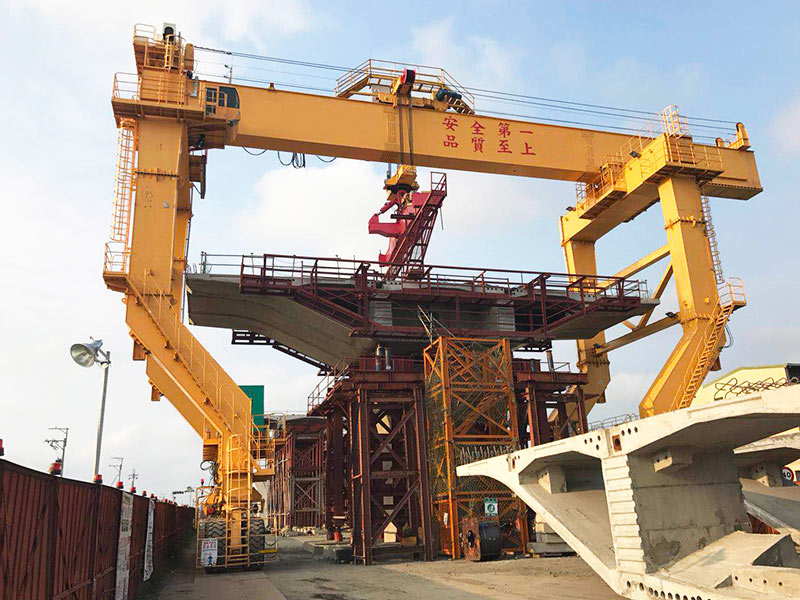
4. Reduced Infrastructure Setup and Lower Relocation Costs
While purchasing or leasing an RTG represents a notable capital investment, it often proves highly cost-effective over the project lifecycle:
- Lower Civil Works Cost: RTGs eliminate the need for heavy continuous concrete foundations and steel rails. Ground preparation is typically limited to grading and compacting travel paths (or laying simple concrete runways).
- High Reusability Across Projects: Highway projects are linear, moving progressively along a corridor. Once a contract segment ends, RTGs can be relocated to new sites without leaving behind costly, unrecoverable rail infrastructure.
5. Seamless Logistics and Faster Transport Loading
Moving beams out of the casting bed is only half the battle; loading them onto multi-axle transport trailers (beam carriers) efficiently is critical to keeping construction on schedule. An RTG can drive directly over the transport vehicle, align precisely over the trailer bed, and lower the girder safely. This vertical approach minimizes alignment maneuvers and loading times, keeping the logistics supply chain moving smoothly between the precast yard and the bridge erection site.
Practical Considerations When Deploying RTGs
To maximize the benefits of rubber tyred straddle cranes in precast operations, engineering teams should consider a few key operational factors:
- Ground Bearing Capacity: RTGs exert high wheel loads. The travel routes must be properly compacted or paved to prevent rutting and differential settlement.
- Equipment Sizing: Select an RTG with appropriate rated lifting capacity (e.g., 50t, 100t, 180t, or higher), span width, and hook height based on the heaviest and longest girders in the project scope.
- Operator Training and Maintenance: RTGs combine hydraulic, electrical, mechanical, and pneumatic systems. Well-trained operators and a routine maintenance program—focusing on tire pressure, hydraulic fluid quality, and hoist inspections—are essential for safe, uninterrupted operation.
Conclusion
As highway construction projects increasingly rely on precast modular components to meet tight schedules and high quality standards, precast yard logistics have become a critical factor in project success. Rubber Tyred Gantry (RTG) cranes offer a flexible, space-efficient, and secure solution for moving heavy bridge girders. By integrating RTGs into precast operations, contractors can optimize storage workflows, reduce site setup costs, and ensure a steady, reliable supply of structural components to the job site.