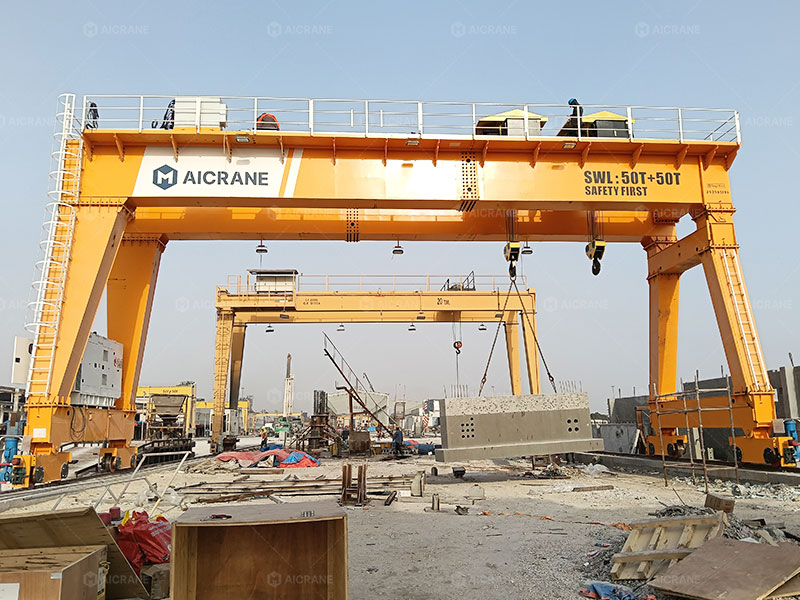
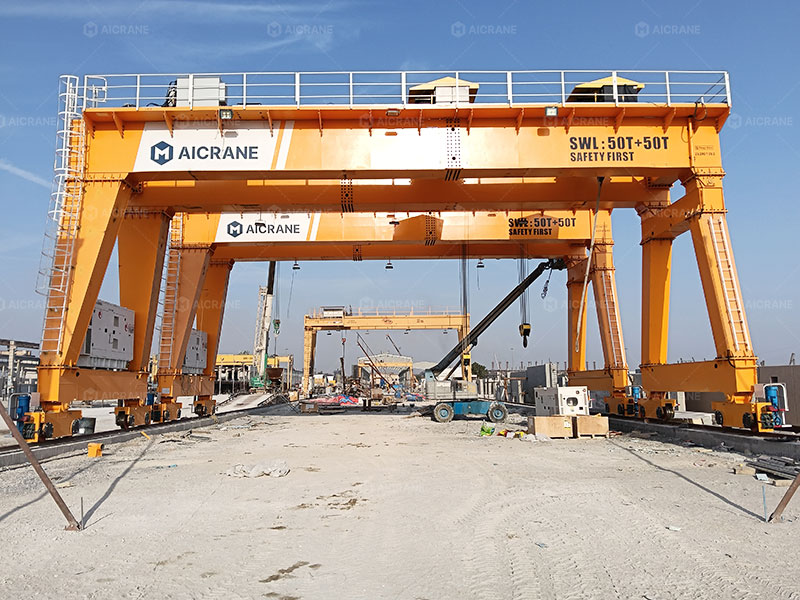
In modern infrastructure developments such as railways, highways, and bridges, the 100-ton gantry crane serves as a core piece of material handling equipment in precast concrete yards. Often configured as double-girder gantry cranes or heavy-duty rail-mounted gantry cranes, these systems must maintain high operational availability to keep up with intense production schedules, whether they are handling massive precast box girders, utility ducts, or precision bridge segments.
However, the working environment within a precast facility is highly abrasive. Fine cement dust is constantly suspended in the air, outdoor operations are continuously exposed to changing weather conditions, and the mechanical and electrical systems of the hoisting machinery must handle frequent start-stop cycles under a rated 100-ton payload.
For precast plant operators and managers, unplanned downtime is a primary contributor to rising operational costs. When critical equipment fails due to accelerated wear, the entire logistics and production flow can be disrupted, leading to potential project delays. Therefore, selecting high-performance 100 ton gantry crane and evaluating the wear resistance of key components is a necessary step during procurement or technical upgrades to ensure optimal equipment availability.
From an engineering perspective, this guide analyzes how the selection of wear-resistant components can extend the equipment’s service life and reduce mid-to-long-term maintenance expenses.
Mechanisms of Abrasive Wear Caused by Cement Dust
In practical operations, cement dust is one of the leading contributors to mechanical component wear and premature failure. Cement dust particles (primarily consisting of calcium silicates) possess high hardness. When these fine particles settle and accumulate on the moving interfaces (sliding or rolling contact surfaces) of the crane, they mix with the lubrication grease. Under continuous friction, this mixture acts as a grinding paste, leading to constant abrasive wear on metal surfaces:
- Gear and Bearing Wear: Abrasive wear leads to increased gear backlash and bearing raceway pitting, resulting in elevated vibration in the drive systems.
- Internal Wire Rope Degradation: Extremely fine dust can penetrate deep between the wire strands, accelerating internal friction and reducing the safe operational life of the wire rope.
- Electrical Enclosure Overheating and Short Circuits: Over time, conductive dust settling inside electrical cabinets can impair heat dissipation and degrade insulation, potentially triggering electrical faults.
- Preventive Strategy: Effective gantry crane maintenance requires prioritizing dust exclusion and correct surface hardness matching for critical friction points.
Technical Selection Guide for Wear-Resistant Components
To address these environmental challenges, it is recommended to specify technical upgrades for the following key components during the RFQ (Request for Quote) or modernization stages:
A. Wheels and Rail Systems
The long-travel (gantry) and cross-travel (trolley) wheels experience significant contact stresses and run directly on rails that are frequently covered in dust and grit.
- Material and Heat Treatment: Standard carbon steel wheels are highly susceptible to premature wear and spalling. It is recommended to select heavy duty gantry crane wheels forged from medium-carbon alloy steel (e.g., 42CrMo or 65Mn). These should undergo overall quenching and tempering, combined with electromagnetic induction hardening on the wheel tread and inner flanges to achieve a surface hardness of HB 300-380 with a hardened depth of at least 15mm.
- Rail Sweeping Devices: Heavy-duty rail sweepers with durable polyurethane blades should be installed in front of the long-travel wheels. This configuration mechanically clears dust and debris from the rails before wheel contact, reducing wheel-rail wear.
B. Wire Ropes and Sheaves
The 100-ton load places high tensile stress on the hoisting wire rope, which experiences continuous bending and contact friction against the sheave grooves.
- Optimized Wire Rope Structure: Consider upgrading from standard wire ropes to compacted steel wire ropes or plastic-filled (plastified) wire ropes. In plastified ropes, a high-performance polymer barrier is extruded between the inner core and the outer strands. This barrier prevents cement dust from entering the core, seals in the internal lubrication, and reduces friction between individual wire strands.
- Sheave Material Modification: Traditional cast iron or cast steel sheaves are heavy and can cause substantial wear on the wire rope. Replacing them with cast nylon crane sheaves (such as MC nylon sheaves) is highly recommended. Nylon sheaves are self-lubricating and possess an ideal hardness compatibility, which preserves the sheave profile while significantly extending the operational life of the wire rope.
C. Gearboxes and Reducers
Reducers are critical for torque transmission; gear and bearing wear can lead to decreased transmission efficiency or tooth surface damage.
- Hard-Toothed Gear Reducers: The hoisting and traveling mechanisms should utilize high-efficiency industrial gear reducers, where the gears undergo carburizing, quenching, and grinding to achieve a surface hardness of HRC 58-62.
- Double-Lip Seals and High-Protection Enclosures: Standard single-lip oil seals degrade quickly in dusty environments. Reducers should be equipped with double-lip shaft seals and labyrinth dust seals to prevent abrasive particles from contaminating the gear oil.
D. Brakes and Friction Linings
The reliability of the braking system is central to lifting safety, and frequent operations can accelerate the wear of friction linings.
- Heavy-Duty Asbestos-Free Linings: For robust 100T double girder gantry crane braking systems, non-asbestos composite friction linings are recommended. These materials maintain a stable coefficient of friction even when thermal buildup occurs during continuous operations.
- Automatic Wear Adjustment: Equipping the brakes with an automatic wear-compensation mechanism ensures consistent braking torque by automatically maintaining the proper clearance as the linings wear down.
E. Cable Management: Energy Chains vs. Festoons
Under outdoor conditions with high dust and UV exposure, traditional cable festoon systems can easily snag, and the cables may experience accelerated outer-jacket degradation.
- Heavy-Duty Engineered Plastic Energy Chains: Replacing traditional festoons with engineered plastic cable chains (also known as drag chains) is highly recommended to house and protect power and control cables. The polymers used should contain UV stabilizers and wear-resistant additives to prevent outdoor aging and embrittlement.
Total Cost of Ownership (TCO) and ROI Analysis
When evaluating the increased initial cost of wear-resistant components, a comparison based on the Total Cost of Ownership (TCO) is highly informative for managers looking for sustainable material handling solutions.
For example, a standard-configuration 100-ton gantry crane operating in a highly dusty, heavy-load environment typically experiences:
- Wire Rope Replacements: Approximately twice a year, including material costs, labor, and associated production downtime.
- Gantry Wheel Replacements: Wheels may require replacement or re-machining every 1 to 2 years due to high wear.
- Reducer Seals and Lubrication Maintenance: Frequent seal failures can lead to lubrication leaks and require regular maintenance interventions.
- Indirect Downtime Costs: The frequent replacement of these wear items results in direct crane spare parts expenses and indirect, costly project delays.
Conversely, investing in a comprehensive wear-resistant package at the initial procurement stage (e.g., alloy steel wheels, plastified ropes, nylon sheaves, and double-sealed reducers) may increase the initial capital expenditure by approximately 10%. However, because the service life of these upgraded components is typically extended by 1.5 to 2 times, unplanned downtime is significantly reduced.
Data indicates that in mid-to-long-term operations, the initial cost premium is typically recouped during the early phases of equipment operation by avoiding major unscheduled stoppages and reducing routine maintenance costs.
Conclusion
In a high-load, dusty precast concrete yard, the durability of crane components directly impacts overall project efficiency. By selecting high-hardness, heavily sealed, and advanced material wear-resistant components for critical friction pairs—such as wheels, wire ropes, sheaves, reducers, and cable protection—operators can minimize the risk of unexpected breakdowns, ensuring a reliable and predictable material handling workflow.